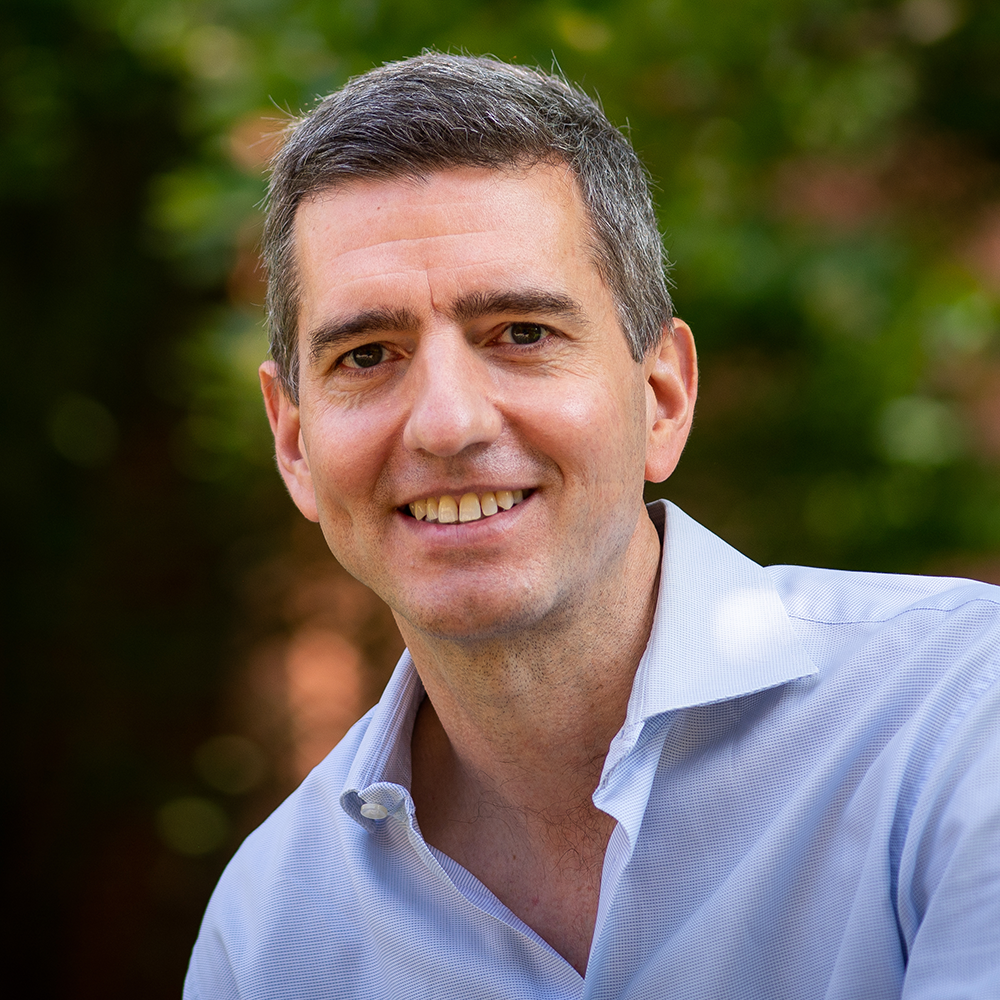
Antonio Donini

Senior Researcher; Instructor

Donini works on issues relating to the future of humanitarian action. From 2002 to 2004 he was a Visiting Senior Fellow at the Watson Institute for International Studies at Brown University. He has worked for 26 years in the United Nations in research, evaluation, and humanitarian capacities. His last post was as Director of the UN Office for the Coordination of Humanitarian Assistance to Afghanistan (1999-2002). Before going to Afghanistan he was chief of the Lessons Learned Unit at OCHA, where he managed a program of independent studies on the effectiveness of relief efforts in complex emergencies. He has published widely on evaluation, humanitarian, and UN reform issues. In 2004 he co-edited the volume Nation-Building Unraveled? Aid, Peace, and Justice in Afghanistan (Kumarian Press) as well as several articles exploring the implications of the crises in Afghanistan and Iraq for the future of humanitarian action.


Email: antonio.donini@tufts.edu

Reports

  • Afghanistan: Humanitarianism in Uncertain Times

    The Afghan crisis, now well into its fourth decade, has many layers. The military and political dimensions of the crisis grab the headlines. But the structural violence and poor governance that underpin it—grinding poverty, rampant abuse of power, criminalized economy, … Read More

  • Towards a “Great Transformation”?

    This report presents the findings of a two-year field research project on local perceptions of social transformation in rural Nepal. The findings, and our interpretations of them, are presented in a manner that can contribute not only to scholarly debate but also to current discussions on development policy choices and on the role of aid agencies. Our study shows that alongside the political transition, there is clear evidence of a qualitative “step-change” in the way Nepali society is organized that is beyond the continual or “normal” processes of incremental change that are always at work. Field evidence clearly suggests that many existing social norms and patterns are being challenged and are being reconstructed.

  • Aid and Violence

    The Communist Party of Nepal (Maoist) launched its “People’s War” in 1996. The Maoists’ rise to power was impressive by any standard. After a successful showing at the polls for the Constituent Assembly in April 2008, they became the strongest organized political force in the country. At the same time, foreign aid has been a fixture of Nepal’s development efforts since the 1950s: the donor community has been the key partner in Nepal’s development successes and failures. How did these two realities—the insurgency and foreign aid—interact?

  • Humanitarian Agenda 2015: The State of the Humanitarian Enterprise

    Humanitarian Agenda 2015: The State of the Humanitarian Enterprise describes the challenges faced by humanitarian actors striving to maintain fidelity to their ideals in a globalized world.

  • Agenda humanitaire à l’horizon 2015: principes, pouvoir et perceptions

    Ce rapport est une synthèse des résultats de la première phase d’un projet de recherche de grande envergure sur les défis et les difficultés susceptibles d’affecter l’action humanitaire au cours de la prochaine décennie.

  • Humanitarian Agenda 2015: Principles, Power, and Perceptions

    Preliminary findings of the Humanitarian Agenda 2015 project.

  • Mapping the Security Environment

    The data presented and analyzed by the study in three cases-Afghanistan, Kosovo, and Sierra Leone-offers intriguing and provocative look at the wide-ranging security needs of local communities and the uneven extent to which these are understood and responded to by major international institutions.

  • Ambiguity and Change

    This study provides international NGOs with a rudimentary framework for strategic planning in the light of the likely challenges of ambiguity and change awaiting them during the next decade. It examines a series of hazard domains – environment, urbanization, migration, and HIV/AIDS – within which NGOs can exercise at least a modicum of control. It identifies other variables well beyond the capacity of NGOs to manage, including combinations of crises that cut across these individual domains and, more broadly still, civilization-changing events.

  • Briefing Papers

  • From Subjects to Citizens?

    Nepal is on the cusp of a major “transformation” from a relatively stable condition of reproduction of social and economic relations based on feudal and caste strictures to a more fluid and open condition where the old “order” is changing if not collapsing and a new order – or disorder – is emerging. This report presents the findings of a two-month long field research on the nature of changes on labor relations and mobility in western Nepal.

  • Afghanistan: Humanitarianism Unraveled?

    Researchers at the Feinstein International Center (FIC) at Tufts University have embarked on a major two-year research project on Humanitarian Action and Politics. This project builds upon and expands on the earlier research on Humanitarian Agenda 2015 -- Principles, Power and Perceptions (HA2015) which involved 13 country case studies of local perceptions of humanitarian action and a synthesis report.

  • Afghanistan: Humanitarianism under Threat

    Building on data collected through interviews in the aid community as well as with ordinary Afghans, the briefing paper finds that humanitarianism is under deep threat in Afghanistan because of the perceived association of aid agencies with the US-led intervention. Humanitarian actors and the principles they profess are under attack. The ability of humanitarian agencies to address urgent need is compromised by internal and external factors, i.e., both by the organization and modus operandi of aid agencies on the ground, and by an extremely volatile and dangerous operating environment.

  • Humanitarian Agenda 2015: Nepal Country Study

    In Nepal, the study’s four themes, and the perceptions of local communities related to them, come together in different ways than the other case studies.

  • Humanitarian Agenda 2015 : Afghanistan Country Study

    The four themes of the HA 2015 research come together in Afghanistan with clear-cut relevance.

  • Presentations

  • Looking Ahead

    Brief comments to the Global Humanitarian Platform Meeting in Geneva.

  • Humanitarian Agenda 2015: Principles, Power and Perceptions

    Text of a presentation given to the Norwegian Refugee Council.

  • How Compatible Are UN Coherence and Humanitarian Partnership?

    Closing Remarks — International Conference Centre Geneva (CICG), Geneva, Switzerland

  • Books

  • The Golden Fleece

    The Golden Fleece delves into questions that are rarely asked and seldom answered. It examines the impact of manipulation on the effectiveness of humanitarian action. The tension between fundamental humanitarian values – the prioritization of life-saving over all other considerations – and political or economic agendas is not new. Relief work has long been subject to manipulation by governments, warlords, public opinion, disembodied realpolitik, and to the calculations of humanitarians themselves. As Lt. Gen. Romeo Dallaire notes in his Foreward, “the sacrosanct principles of neutrality and humanitarian space have been used and abused by many in ways which ultimately benefit killers rather than the victims of armed conflict.”

  • Book Chapters

  • Through a Glass Darkly — Humanitarianism and Empire

    By Antonio Donini. In N. Gunewardana and M. Shuller, Capitalizing on Catastrophe: Neoliberal Strategies in Disaster Reduction, AltaMira Press, Plymouth: UK, 2008.

  • Knocking on Heaven’s Door

    By Antonio Donini. In Karen Guttieri and Jessica Piombo (eds), Interim Governments. Institutional Bridges to Peace and Democracy? US Institute for Peace Press. Washington DC, 2007.

  • Negotiating with the Taliban

    By Antonio Donini. In Larry Minear and Hazel Smith (eds), Humanitarian Diplomacy. Practitioners and their Craft, United Nations University Press, Tokyo-New York-Paris, 2007.

  • Is Universality under Threat? Humanitarian Aid and Intervention in the 2000s

    By Antonio Donini. In I. Richter et al (eds), Building a Transnational Society. Global Issues and Global Actors, Palgrave Macmillan, Basingstoke (UK), 2006.

  • Principles, Politics and Pragmatism in the International Response to the Afghan Crisis

    By Antonio Donini. In A. Donini, N. Niland, K. Wermester (eds),Nation-building Unraveled? Aid, Peace and Justice in Afghanistan, Kumarian Press, Bloomfield, CT, 2004.

  • The Geopolitics of Mercy: Humanitarianism in the Age of Globalization

    By Antonio Donini. In R. Vayrynen and W. Nafziger (eds), The Prevention of Humanitarian Emergencies, UNU-WIDER, Palgrave, New York, 2002.

  • Peer-Reviewed Articles

  • Local Perceptions of Assistance to Afghanistan

    By Antonio Donini. In International Peace-keeping, Volume 14, N. 1, January 2007.

  • Between Cooptation and Irrelevance: Humanitarian Action after Iraq

    By A. Donini, L. Minear, and P. Walker. Journal of Refugee Studies.

  • Other Major Publications

  • Assorted articles

    By Antonio Donini. 30 page article on “L’intervento umanitario” (Humanitarian intervention) and shorter articles on “humanitarian principles” “humanitarianism” and “humanitarian emergency”, in Enciclopedia dei diritti umani e azione umanitaria, UTET, Torino, Italy, April 2007.

  • Learning the Lessons? A Retrospective Analysis of Humanitarian Principles and Practice in Afghanistan

    By Antonio Donini. OCHA, June 2003.