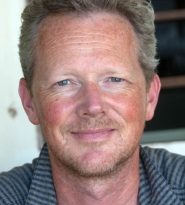
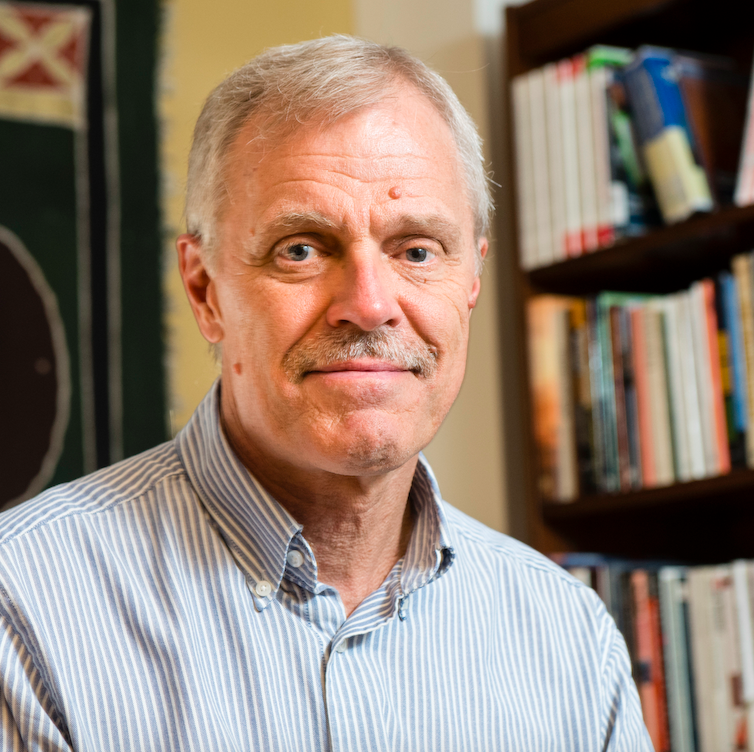
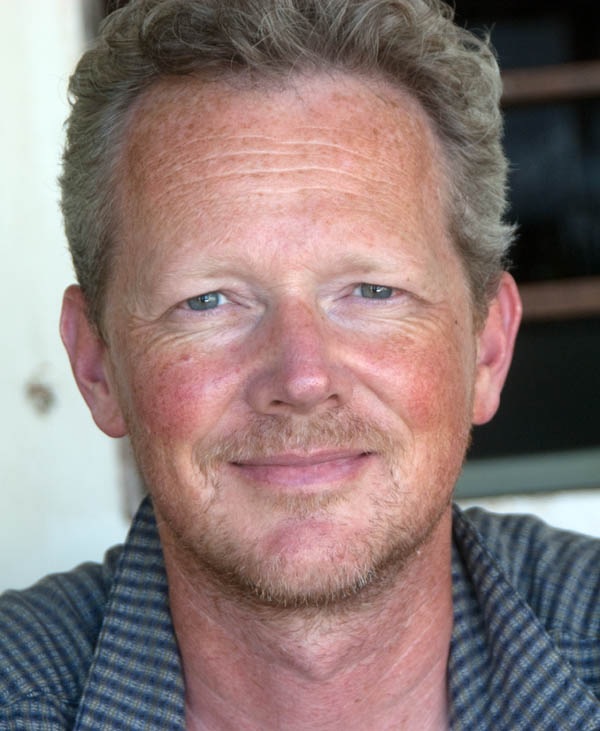
Peter Walker

Director of the Feinstein International Center; Rosenberg Professor of Nutrition and Human Security


Director of the Center since September 2002 and active in development and disaster response since 1979, Peter has worked for a number of British-based NGOs and environmental organizations in several African countries, as well as having been a university lecturer and director of a food wholesaling company. Peter joined the International Federation of Red Cross and Red Crescent Societies in Geneva in 1990 where he was Director of Disaster Policy for 10 years before moving to Bangkok as Head of the Federation’s regional programs for Southeast Asia. He has traveled extensively in the Middle East, Africa, Eastern Europe and the Former Soviet Union, and has published widely on subjects as diverse as the development of indigenous knowledge and famine early warning systems, to the role of military forces in disaster relief. Peter was the founder and manager of the World Disasters Report and played a key role in initiating and developing both the Code of Conduct for disaster workers and the Sphere humanitarian standards.

Email: peter.walker@tufts.edu

Reports

  • Climate Change as a Driver of Humanitarian Crises and Response

    This paper explores the relationships between climate change, humanitarian crises and humanitarian response through a review of published and grey literature. We examine the historical evidence for associations between climate change and humanitarian crises, and move on to a brief review of present humanitarian crises directly attributable to disasters triggered by climatological events. Finally, we look at three interrelated aspects of future trends: changing weather patterns, increasing societal vulnerabilities, and shifting demographics.

  • Sex and Age Matter

    Humanitarian aid is largely guided by anecdotes rather than evidence. Currently, the humanitarian system shows significant weaknesses in data collection, analysis and response in all stages of a crisis or emergency. As a result, the present humanitarian system is much less evidence-driven than it should be and than it would like to be.

  • Professionalising the Humanitarian Sector

    This study, commissioned by the UK’s Enhancing Learning and Research for Humanitarian Assistance project (ELRHA) and carried out by the Feinstein International Center in collaboration with RedR, comes after a decade in which the humanitarian enterprise has sought to develop global standards, codes and representative bodies, and amid increasing momentum for creating a global system for professional development, accreditation and association. The study explores the nature of professionalism today and sets out key recommendations which, if implemented, could increase accountability, raise the quality and consistency of humanitarian service, open up the profession to talented new recruits, and raise the status of the humanitarian service provider to a level on a par with other professional groups.

  • One for All and All for One

    A significant proportion of humanitarian assistance is now delivered by NGOs which have in effect become federated trans-national organizations, alliances of members from different countries, all seeking to provide assistance in times of crisis. This report describes research carried out to better understand how these transnational bodies organize their membership, deliver and accountability systems in times of crisis.

  • The Humanitarian Costs of Climate Change

    Using existing international databases that track disaster occurrence and humanitarian costs, this research attempts to improve understanding of how climate change may affect international humanitarian spending.

  • One for All and All for One

    In recent years and for a variety of reasons, the International Federation of Red Cross and Red Crescent Societies (IFRC) has been buffeted by an array of forces. In one sense, the pressures are similar to those experienced by other federations, perhaps accentuated by the fact that the IFRC is one of the earliest and developed into the largest such federated, or federal, institutions. Like other federations, the IFRC is struggling with a set of generic problems.

  • Ambiguity and Change

    This study provides international NGOs with a rudimentary framework for strategic planning in the light of the likely challenges of ambiguity and change awaiting them during the next decade. It examines a series of hazard domains – environment, urbanization, migration, and HIV/AIDS – within which NGOs can exercise at least a modicum of control. It identifies other variables well beyond the capacity of NGOs to manage, including combinations of crises that cut across these individual domains and, more broadly still, civilization-changing events.

  • Briefing Papers

  • The Use of Evidence in Humanitarian Decision Making

    This paper reports the results of a study undertaken during 2012 by Tufts University for the Assessment Capacities Project (ACAPS), as part of the latter’s “Operational Learning” strand of work. This study is designed to complement the work of ACAPS … Read More

  • Follow the Money

    Is there enough money, is it going to the right people in the right places in the most efficient way?

  • The Future of Humanitarian Action

    While humanitarian action and international disaster response have long traditions in terms of the actions of the International Red Cross and Red Crescent and a number of Christian charitable organizations (and of course, the coping mechanisms of societies and communities), humanitarianism in its present form really dates from the end of World War II. The construction of the notion of an international community of humanitarian actors (UN agencies, Red Cross/Crescent, and NGOs) grew alongside the development of the United Nations system, the Bretton Woods institutions, and the retreating of the European imperial powers and was reinforced with the ending of the Cold War.

  • Presentations

  • Complexity and Context as the Determinants of the Future

    Humanitarian crises today are not due to one underlying cause but rather to a set of complex issues or an accumulation of adverse trends.

  • Crisis and Normality, Two Sides of the Same Coin

    A presentation by Peter Walker.

  • Human Security and the Pivotal Role of Science in Achieving It

    Inauguration address for the Irwin H. Rosenberg Professorship of Nutrition and Human Security

  • Books

  • Shaping the Humanitarian World

    By Peter Walker and Daniel Maxwell. 2009. Series on Global Institutions. London: Routledge.

  • World Disasters Report 2000

    P.J.C. Walker and J. Walters (Eds). IFRC, Geneva, 2000.

  • World Disasters Report 1999

    P.J.C. Walker and J. Walters (Eds). IFRC, Geneva, 1999.

  • World Disasters Report 1998

    P.J.C. Walker and J. Walters (Eds). IFRC, Geneva, 1998.

  • Book Chapters

  • Local Knowledge: The Forgotten Resource

    By P.J.C. Walker. In M. Nazim (Ed.), Environmental Challenges: From Stockholm to Brazil and Beyond.The Environmental Society of Bangladesh, 1993.

  • Indigenous Knowledge and Famine Relief in the Horn of Africa

    By P.J.C. Walker. In D. Warren (Ed.), Indigenous Knowledge Systems, The Cultural Dimension of Development. Pub: Kegan Paul International, London, 1993.

  • Famines and Local Knowledge

    By P.J.C. Walker. In K. Rupesinghe and M Kuroda (Eds.), Early Warning and Conflict Resolution. PRIO, Oslo, Norway, 1991.

  • Peer-Reviewed Articles

  • Corruption in Humanitarian Assistance: Perceptions, Gaps and Challenges

    By Daniel Maxwell, Sarah Bailey, Paul Harvey, Peter Walker, Cheyanne Church and Kevin Savage (2012). Disasters , Vol. 36(1), pp. 140-160.

  • The Evolving Food and Nutrition Agenda: Policy and Research Priorities for the Coming Decade

    By Eileen Kennedy, Patrick Webb, Peter Walker, Edward Saltzman, Daniel Maxwell, Miriam Nelson and Sarah Booth (2011). Food and Nutrition Bulletin , Vol. 31(1), pp. 60-68.

  • Foreign Military Resources for Disaster Relief: An NGO Perspective

    By P.J.C. Walker. Disasters Journal. Vol. 16, p152-159. Available online

  • The Future of World Food Programme (WFP) Programming in Sudan

    By K. Gelsdorf, P. Walker, and D. Maxwell. Disasters Journal 2007 Vol 31 S1 S1-8

  • Cracking the Code: The genesis, use and future of the Code of Conduct

    By P. Walker. Disasters Journal Vol 29, Issue 4 December 2005. Pages 323-326.

  • The World Conference on Disaster Viewed through the Lens of Political Ecology

    A Dozen Big Questions for Kobe and Beyond. By P. Walker and B. Wisner. Submitted to Capitalism, Nature, Socialism. Vol 16, Number 2, June 2005, pages 89-95

  • Smoke and mirrors: deficiencies in disaster funding

    By P. Walker, B. Wisner, J. Leaning, and L. Minear. British Medical Journal. Vol 330, 247-250

  • Between Cooptation and Irrelevance: Humanitarian Action after Iraq

    By A. Donini, L. Minear, and P. Walker. Journal of Refugee Studies.

  • Birthing Sphere: The early history of the Sphere project

    By P. Walker and S. Purdin. Disasters Journal Vol; 26 100-111

  • Depolarising the ‘Broadened’ and ‘Back-to-Basics’ Relief Models

    By S. Jackson and P.J.C. Walker. December 2002: Disasters Journal.