My edited volume, How Mass Atrocities End: Studies from Guatemala, Burundi, Indonesia, the Sudans, Bosnia-Herzegovina, and Iraq (Cambridge 2016) was published recently, with case study chapters by Roddy Brett, Noel Twagiramungu, Claire Q. Smith, Alex de Waal, Fanar Haddad, and myself. To help bridge the academic research with policy audiences, we also produced a short briefing paper based on insights from the book. The text is below and the full briefing paper is available as a pdf.
KEY MESSAGES:
- National political agendas define how atrocities end, not international policy or interventions.
- Before the 1990s, endings are predominately determined by perpetrators’ generally successful use of overwhelming force to achieve their goals.
- Thereafter, atrocity endings are more varied due to a wider array of influences impacting patterns violence, and dependent on the convergence of multiple interests towards de-escalation of mass violence.
- Windows of opportunity to de-escalate violence can only be consolidated and maintained in places where a state has sufficient capacity.
- Ending atrocities is not synonymous and can be at odds with advancing democracy.
KEY FINDINGS:
National Politics Determine Atrocity Endings
Atrocity endings are always compromised and complicated. Even when violence subsides, its political, social, health and economic impacts have long-term affects. Nonetheless, research on endings can help us understand how power operates and decisions are made that alter the course of mass violence. Local and regional actors are the most important actors in determining when and how an ending is possible. Our cases confirm one of the key insights of recent work on genocide and mass atrocities[i]: that perpetrators are guided by a strategic goal of gaining or consolidating power, rather than the physical elimination of the targeted group. Endings occur when perpetrators realize that their interests are better served by decreasing violence than by continuing it. Decisions to scale back violence are complicated by the way in which violence, once unleashed, tends to take on its own logic, escalating in intensity, expanding geographic reach, enlisting agents, and activating diverse agendas. Endings become possible at the point at which the convergence of multiple drivers of violence starts to unravel, as our cases illustrate. In contexts where the perpetrators are sufficiently cohesive within a command structure, this may appear are a single decision-making moment. Elsewhere, it may appear more chaotic.
Even in the few cases studied where significant political change occurs as part of the ending dynamic—including when a new regime comes to power, national and local patterns of political contestation and governance practices determine how mass atrocities end.
In Burundi, episodes of violence in the 1970s and 1980s were characterized by Hutu groups using violence against the state or Tutsi civilians, prompting a response of overwhelming force from the Tutsi-dominated military. Violence subsided as the government and military consolidated control and “restored order.” This pattern changed after 1993, Noel Twagiramungu writes, when the Hutu armed opposition increased its capacity and for the first time began to hold territory. Violence thereafter de-escalated through a combination of key leaders’ commitment to moderation, the stalemate in the armed conflict, the influence of the war and genocide in neighboring Rwanda, and international pressure. This combination created a context whereby the gains of political moderation outpaced those of ethnic extremism, and fueled a transformational ending—whereby disputes between groups shifted to the political plane, no longer occurring solely along the ethnic divide. The new alignment of interests appears to be holding even as Burundi continues to experience political violence in response to Pres. Pierre Nkurunziza’s contested third term.
Armed conflict in Guatemala began in 1965 and did not end until 1995. The phase of mass atrocities, characterized by an articulated plan to kill significant portions of the indigenous Maya population and reorganize the survivors in securitized population centers, was concentrated between 1981 and 1983. As Roddy Brett argues, this phase ended when the Guatemalan army achieved its goals: not to physically eliminate the Maya, but to create a modern, institutionalized state with a consolidated, Ladino identity. The army further managed to secure a seat for itself at the nation’s economic table, previously dominated by a social and business elite. An internationally mediated peace process provided the final touch on the emergence of the modern Guatemalan state. Brett contends that the peace agreement (1997), despite its credentials and rights-oriented mechanisms, protected the army’s gains and did nothing to alter the structural marginalization of the Maya. Overt, large-scale violence is no longer necessary to solidify these outcomes that disadvantage indigenous communities.
Across the many instances of mass atrocities in Sudan’s contemporary history, Alex de Waal chronicles two kinds of endings: one, the government achieves its immediate goals; and two, perpetrator groups can no longer sustain high levels of violence because of internal dissent, resistance by the targeted groups, and organizational and resource constraints. Such endings are incomplete, with unresolved conflicts risking recurrent mass violence. The greatest risk for mass atrocities arises when the central government and provincial military elites both have interests in mass violence, creating an escalatory spiral. Sudan’s “endings” are better understood as shifts from high-level mass atrocities to lower-level violence when there is a breakdown in coordination between these two sets of actors. A similar set of factors is found in South Sudan, but with a less clear distinction between a weaker center and relatively more powerful provincial military-political elites. It follows that it is even hard to locate any clear ending to mass atrocities in South Sudan.
Indonesian atrocities, as Claire Smith demonstrates, ended in dramatically different fashion during the Suharto period of military dictatorship and under the semi-democratic state that followed. However, this historical line cannot explain additional differences between two key cases, Papua and East Timor, both of which suffered violence before and after political transition. A number of arguably unique factors aligned to enable East Timor to exit a cycle of systematic violence through independence: an extremely capable Timorese leadership inspired a transnational activist network, which was able to internationalize their political agenda. The first Indonesian leader after Suharto’s military dictatorship, B. J. Habibie, saw himself as a reformer and tried to liberalize the state. While he was unable to consolidate his agenda within either the military or government, the internal dissent created an opening seized by the Timorese and backed by threat of international force. This opening swiftly closed, as the case of Papua demonstrates. There, the government and military decided that there would be no further independence for Indonesian territories. Instead, they experimented with a range of policies to quiet separatist hopes: increased cultural and political expression, militarized crackdowns and attempts to co-opt the elite into the status quo.
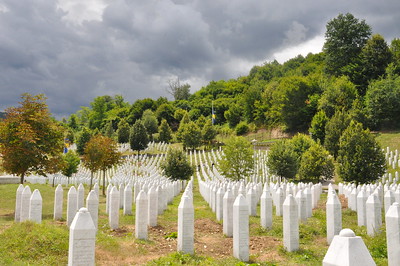
In Bosnia-Herzegovina, the initial phase of conflict in 1992 witnessed an enormous spike of killing and displacement, as the Bosnian Serbs made quick and effective use of their military superiority to claim and then consolidate control of over 70 per cent of Bosnian territory. This initial phase of mass atrocities, argues Bridget Conley-Zilkic, halted due to the “success” of the campaign, the government of Bosnia-Herzegovina’s armed resistance, and the Bosnian Serbs’ internal limitations. Violence continued throughout the conflict but not at the same intensity of killing, except following the fall of Srebrenica in 1995. The conflict was halted as regional alliances shifted, consensus emerged on the political framework for the Yugoslav successor states, an offensive by the Bosnian government and Croatian army reduced the area held by the Bosnian Serbs, and bold U.S. diplomacy seized the moment. While often treated as a stand-alone exemplar of what international military power can accomplish, the role that NATO airpower played, while particularly important in breaking the siege of Sarajevo, cannot be accurately assessed in isolation from the broader context.
A major blind spot of the anti-atrocities movement is Iraq post-2003. Despite some human rights-based arguments backing the initial intervention, the U.S.-led intervention followed a political-military, not humanitarian or anti-atrocities logic; a framing that anti-atrocity activists failed to challenge. Since 2003, Iraq has experienced almost every “remedy” for mass atrocities that the anti-atrocity toolbox has to offer: condemnation, sanctions, no-fly zones, trials, regime change, the full policy attention of the United States, and a seemingly endless flow of development funds. Yet it has experienced more than a decade’s worth of fluctuating violence consistently characterized by targeting of civilians, with no end in sight. Fanar Haddad argues that before 2003, large-scale violence against civilians in Iraq ended when the Iraqi state deployed overwhelming force to accomplish its goals. After 2003, despite (or because of) the U.S. occupation, there has been no force capable of asserting sufficient state control to subdue violence. Violence escalates when various incentives converge: anti-state, anti-Shi’ite, and anti-occupation violence on the one hand, concentrated against pro-State, anti-Sunni, and anti-terrorist violence on the other hand. An “ending” of sorts was possible in 2007–2008 as Sunni leaders realized they were losing the armed conflict and reached out to the U.S. to bolster their position within the new Iraq. Simultaneously, the U.S. counterinsurgency policy shifted to a more population-centric approach that not only increased numbers of American boots on the ground, but helped drive a wedge between mainstream Sunni leaders and al-Qaeda elements. Additionally, the Iraqi state began behaving like a state rather than a coalition of Shi’ite interests. But the moment of contingency when these factors aligned was short-lived: sectarian interests reasserted dominance over state politics, and re-confirmed violence as the preferred means through which politicians would pursue their incompatible goals.
Post-Cold War Patterns of Mass Atrocity Endings
During the Cold War, as the cases studied demonstrate, it was possible for states to deploy overwhelming force against civilian populations and retain their position in the international community. These large-scale campaigns of violence against civilians concluded when the state met its objectives. One exception in this study is Sudan, where the state never fully successfully defeated opposition forces regardless of the level of atrocities it committed.
This patterns changes in the 1990s. While policies associated with the anti-atrocity toolbox played a role, they do not determine atrocity endings but rather interact with other forces to diminish the capacity of states to impose endings through overwhelming violence. These additional factors include: democratization, emphasis on human rights, economic development, increased occurrence of international mediation, and interposition of peacekeeping forces. In parallel, whereas previously authoritarian, strong states were the most likely perpetrators of genocide and mass atrocities, today civilians are most vulnerable to violence in states that are neither fully authoritarian nor democratic. Together, these trends have resulted in positive outcomes: global reductions in the number and scale of atrocity events, a trend that is confirmed across our cases with the exception of Iraq post-2003.
However, these conditions also produce new challenges that complicate how mass atrocities end. Greater restrictions on states and the centralization of power do not simply allow the ‘positive’ forces to exert more control over endings. Rather, we see the multiplication of forces impacting endings, for better or worse. While this does include international actors seeking to influence endings by deploying specific anti-atrocity policies, it also includes a wider range of actors from local, national and regional communities, which are interested in security, gaining power, economic advantage, democratization, or other agendas. Into this mix, we must view the widely decried and increasingly prominent role of nonstate armed groups in the perpetration of violence. Our cases suggest that non-state armed perpetrators have long been an important component in the perpetration of violence against civilians in the former Yugoslavia, Sudan, Burundi and Indonesia. However, a difference today in many locations is the decreased capacity of states relative to non-state armed actors. Increasingly, the distinction between state and nonstate armed actors is less meaningful; ‘state actors’ often don’t possess or display the qualities of ‘stateness’ or governmentality any more than their supposedly ‘non-state’ armed challengers.
Recognition that political power is more diffuse and a wider array of actors are involved in situations of mass atrocities tempers the story of how anti-atrocity policies contribute to endings. The dominant paradigm of an anti-atrocity toolbox is predicated on a straightforward relation of external pressure on a coherent state to bring about policy changes. Yet the record is remarkably mixed, not only in which actors apply what tools, but also the impact of policy tools. Our cases align with findings from statistical studies demonstrating that even the most robust policy response – use of international military forces in the name of protecting civilians – does not produce a consistent outcome. The same holds true for the full range of diplomatic, economic, military and legal tools that are brought to bear on situations[ii].
To draw out just one factor—use of military force – we see significant variations in outcomes. For instance, Alex de Waal argues that the negotiation of a ceasefire agreement and the deployment of a relatively small group of African Union ceasefire monitors impacted the de-escalation of violence in Darfur. The later deployment of a large, Chapter VII UN peacekeeping force did not coincide with a reduction of violence. Claire Smith emphasizes three particularly significant actions by international actors in East Timor: transnational advocacy networks; UN representatives on the ground in 1999; and Australian military intervention, threatened against Indonesia’s wishes and then carried out with Indonesia’s permission. However, Smith finds that none of these factors was relevant to patterns of violence in Papua, which was never internationalized to the extent that the government felt obligated to reform its relationship with its critics there. In Bosnia, Conley-Zilkic notes that the presence of a UN peacekeeping force (without a civilian protection mandate) may have delayed the onset of mass killing in Srebrenica, but neither there nor elsewhere was it the determinative factor in the endings of mass atrocities. She also argues that the 1995 NATO air campaign, which unquestionably played a role in terms of ending the siege of Sarajevo, cannot explain the larger dynamics of either atrocity or conflict endings. In Iraq, leaving aside the question of onset of violence and observing only the trends in decline of violence, Haddad notes that changes in U.S. military strategy played a role in the temporary decrease in violence that began in 2008, but was incapable of forging a more sustainable ending.
Atrocity Endings are Increasingly Contingent
Endings in post-1990 cases of mass atrocities are still governed by the same logic as before this period: perpetrators decide that they can better pursue their long-term interests through policies other than violence against civilians. However, because the pursuit of interests is increasingly influenced by a wider range of actors and agendas, particularly in weaker states, declines in violence have become more contingent on the alignment of various factors to open a window of opportunity.
While the application of discrete anti-atrocity policies can make a difference – and in several of our cases clearly do contribute to ending dynamics – the more fundamental point is that the ending dynamic cannot be disarticulated into distinct, component parts. Endings are possible when the preponderance of political factors produce a realignment of political interest. Thus, in terms of direct actions that international players might take – precisely the toolbox model that has dominated the anti-atrocities agenda – actual endings do not suggest a one-to-one relationship between international actions and the occurrence of atrocities.The low capacity of both governmental and insurgent armed groups can result in highly contingent compromise endings that are not always sustainable. Agreements may be possible only at the convergence of multiple factors, therefore are temporary— what de Waal terms “turbulent” in the sense of conditions that are changeable and even chaotic over short spans of time, but retain their structure over longer periods. We find in Iraq, Sudan and South Sudan, for instance, where political expression too often includes perpetration of atrocities, that violence fluctuates in scale as interests align and diverge.
Ending Atrocities is Not Synonymous with Advancing Democracy
Today’s more complex and contingent patterns of atrocities endings emerge out of the partial success of efforts to encourage democratization, human rights, and economic liberalization, as well as the saliency of the norm against atrocities. But the progress on reducing atrocities cannot be read as absolute gains in terms of producing capable, fully democratic states.
At times, democratization and anti-atrocities policies can even be at odds. Given that perpetrators of atrocities generally aim to consolidate control, endings are possible when perpetrators decide that their long-term interests are sufficiently secured and better served by other policies. Hence, international policies that simultaneously pursue democratization – which acts to increased political competition and generates additional power centers, weakening centralized state structures – and ending atrocities may be counter-productive for perpetrators of atrocities. As we saw in Bosnia, Indonesia, and Iraq opening formerly tightly-regulated political systems to competition proved destabilizing both to incumbents and contenders. This is not an argument in favour of the old model of strong states capable of using overwhelming force against civilians, but it is a description of what may well be a new constellation of threats that arise as power is differently legitimated, distributed and managed. If violence is escalating, policy positions that favour stabilization in order to avert or halt atrocities may be at odds with democratization.
For example, elections are frequently treated as an endgame for post-conflict peacebuilding programing, and yet are consistently cited as triggers for violence. Frequent change in leadership is another warning for mass atrocities, but regime change is considered the most potent tool to halt their occurrence. When large-scale, overwhelming violence against civilians is on-going, these contradictions in approach may appear less important. Nonetheless, they bear testimony that in weak states the paradigms for democratic statebuilding may also increase risks for mass atrocities.
It is important not to confuse changes in the occurrence or risk of mass violence targeting civilians with the conditions that enable deep democratic practices to take root. There is a credible argument to be made in the cases of Guatemala, Timor Leste, Indonesia, and Bosnia that mass atrocities of the sort that placed these cases on our agenda are unlikely to recur. Even in Burundi, which has surged back up the atrocities watch list, the splintering of violence and actors has more in common with the period of the conclusion of the civil war than with the starkly asymmetrical violence of previous decades. However, what remains are a variety of forms of violence, oppression, and dysfunction.
The diminished likelihood of mass atrocities in these locations correlates with the capacity of states to adopt the trappings of liberal governance, while testing the limits of how much political reform is necessary. Key power brokers in states’ security and governance sectors adjusted to the new rules of elections, liberal economic policies, cooperating with U.S. security strategy, and the prohibition on violence against civilians that surpasses a high threshold. Leaders adapted by calibrating how much violence the new rules would tolerate against how much was needed to protect their control over power.
It would be false to read these transformations as qualitative advances towards democratization; they do not on their own herald a more just or democratic dispensation. In this, reducing the likelihood of mass atrocities is fundamentally different than efforts to advance political rights or addressing structural violence, which require true reform of governance relationships. It is easier for those in power to remain under the mass atrocities radar and still dominate the political and economic scene than it is to adhere to other tenets of human rights or democratization.
On the question of recurrence, we must bracket Iraq, Sudan, South Sudan and Burundi as places where violence continues. In these cases, political contestation regularly includes violence, part of the expression of political contention and elite bargaining. Actual violence ebbs and flows in relation to new political realignments or shifts, but appears, for now, to be a persistent part of how these countries function. In South Sudan and Iraq, the government itself is so poorly institutionalized that it makes little sense to describe its actions and capacities in terms of a state. In these countries, the calibration of violence in line with the rules of the “international community” simply is not possible. The state in both cases offers no decision-making apparatus to govern use of violence; which is not to say that decisions are not made by ‘state’ or ‘nonstate actors’, but that they are not made within the context and capacity associated with a centralized state. Therefore, “endings” are not possible; only fluctuations as various factors align and break apart.
Conclusion and Implications
Two key questions are central to effective efforts to halt widespread and systematic violence against civilians: 1) what factors influence how key leaders perceive the strategic value of violence against civilians? 2) How, given variations in state capacity, can the interests of key leaders be harnessed to terminate violence?
The factors that seem to contribute to decline do not readily translate into a policy playbook that applies evenly to all locations. There is a limit to how much societies can absorb and integrate internationally defined change into their own practices, regardless of pressure, even in its most coercive forms. Change comes when the alignment of political interests shifts. International efforts to expand the norm against atrocities has borne fruit, but the results should not be understood as a direct output of any particular anti-atrocity policies nor as necessarily the rooting of democratic practices.
When states are strong enough to adopt minimal standards of liberalism, there is reduction in their use of widespread and systematic assaults against civilians. However, this reduction exists alongside on-going dysfunction, oppression, and lower levels of violence. For states that cannot summon the means, and where key actors lack the incentives or will to play by the new international rules, we see continuing mass atrocities. Neither in contexts where states are capable nor weak, , do we see the creation of the forms of governance that adhere to the standards of liberal peace or state-building ideals. The contributions of the anti-atrocity agenda form a more modest, yet nonetheless life-saving change.
[i] See, for example: Downes, Alexander B. “Desperate Times, Desperate Measures: The Causes of Civilian Victimization in War.” International Security 30, no. 4 (2006): 152-195; Straus, Scott. Making and Unmaking Nations: War, Leadership, and Genocide in Modern Africa. Ithaca: Cornell University Press, 2015; Valentino, Benjamin. Final Solutions: Mass Killing and Genocide in the Twentieth Century. Ithaca: Cornell University Press, 2004; Wood, Reed M., Jacob D. Kathman, and Stephen Gent. “Armed Intervention and Violence Against Civilians in Intrastate Conflicts.” Journal of Peace Research 49, no. 5 (2012): 647-60.
[ii] Conley-Zilkic, Bridget, Saskia Brechenmacher, Aditya Sarkar. 2016. “Assessing the Anti-Atrocity Toolbox” February: Available at http://fletcher.tufts.edu/~/media/Fletcher/Microsites/World%20Peace%20Foundation/Publications/Atrocity%20Toolbox_February%202016.pdf Accessed April 5, 2016.