The Integration of Syrian Refugees into Turkish Society

By: Sofia Paredes

Visit to RASAS and our lovely guide Fatma Betül

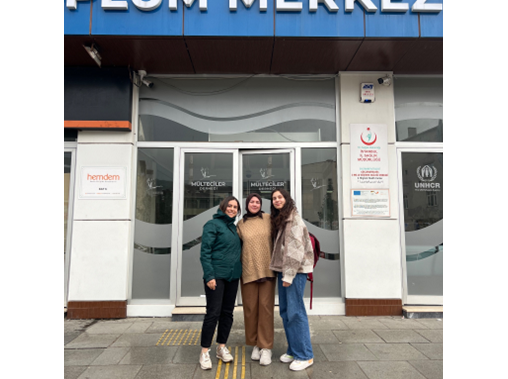
During our time in Istanbul, I was able to get better insight into the integration of Syrians into Turkish society. The highlight of the trip was my visit to the Refugees and Asylum Seekers Assistance and Solidarity Association in Sultanbeyli. The center is located 1.5 hours away from the center of Istanbul. Sultanbeyli felt like a completely different world. This is where most of the Syrian population in Istanbul resides. The signs here were all in Arabic and almost no Turkish was spoken.  

Upon our arrival, I was lucky enough to be given a guided tour of the eight-story building by Fatma Betül Basyigit, Human Resources Manager of the Refugee Association. During our day at the center, we also met with the legal professionals and labor representatives of the organization. As Fatma highlighted, many of the issues experienced by the refugees today are similar to what they experienced 13 years ago, implying that despite the tremendous EU funds flowing into Turkey as part of the 2016 EU-Turkey deal, the money has been ineffective at serving the refugee population.  

The services provided by the center were largely to make up for the shortcomings of the government, as the center focused on providing basic health support. The biggest obstacle to refugees’ financial stability seems to be their lack of access to formal employment according to Fatma.  

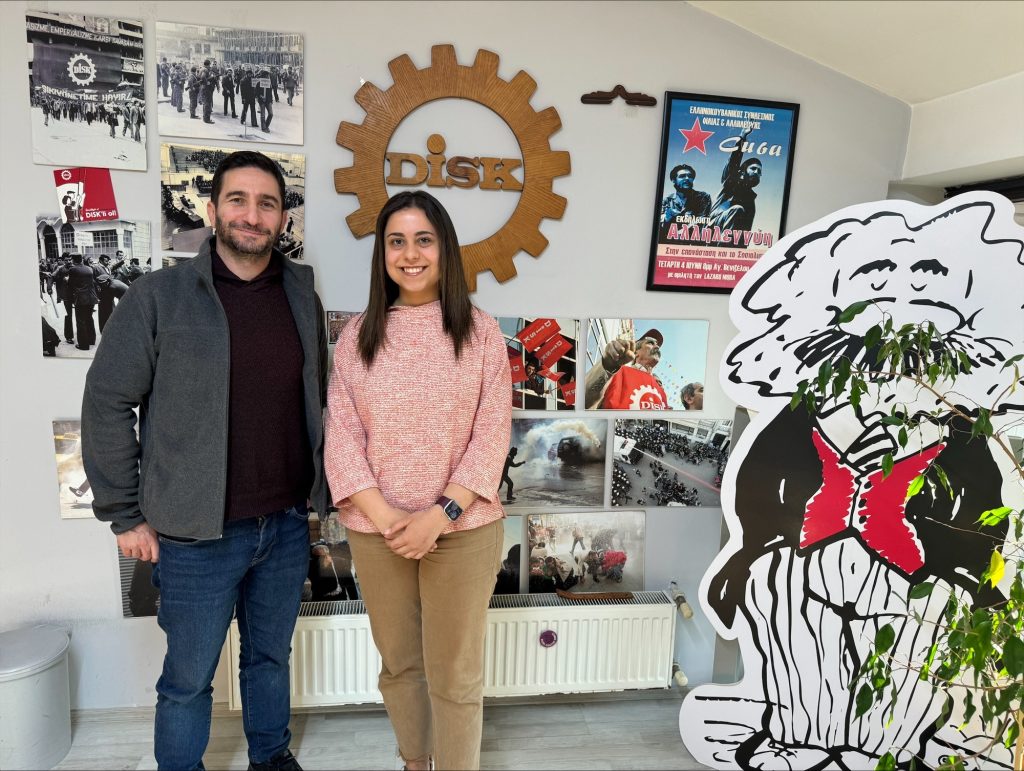
This was also confirmed by members of DISK, The Confederation of Trade Unions of Turkey. I visited their offices to find out more about the role of Syrians in the Turkish labor market, and I learned that despite their effort to support Syrians through DISK’s Arab-speaking Legal Call Center, Syrians without a social security number are not allowed to join unions, and therefore have limited legal support.   

Besides the legal barriers, social prejudice was also highlighted as a major barrier to integration. This is why Fatima Betül emphasized RASAS’s focus on social cohesion, and she was proud to show us the communal kitchen, where Syrian and Turkish women were baking together to support themselves financially but also to break down social barriers.  
Frankestayn Kitabevi- A Site of Literature and Community

By Dani Steinberg

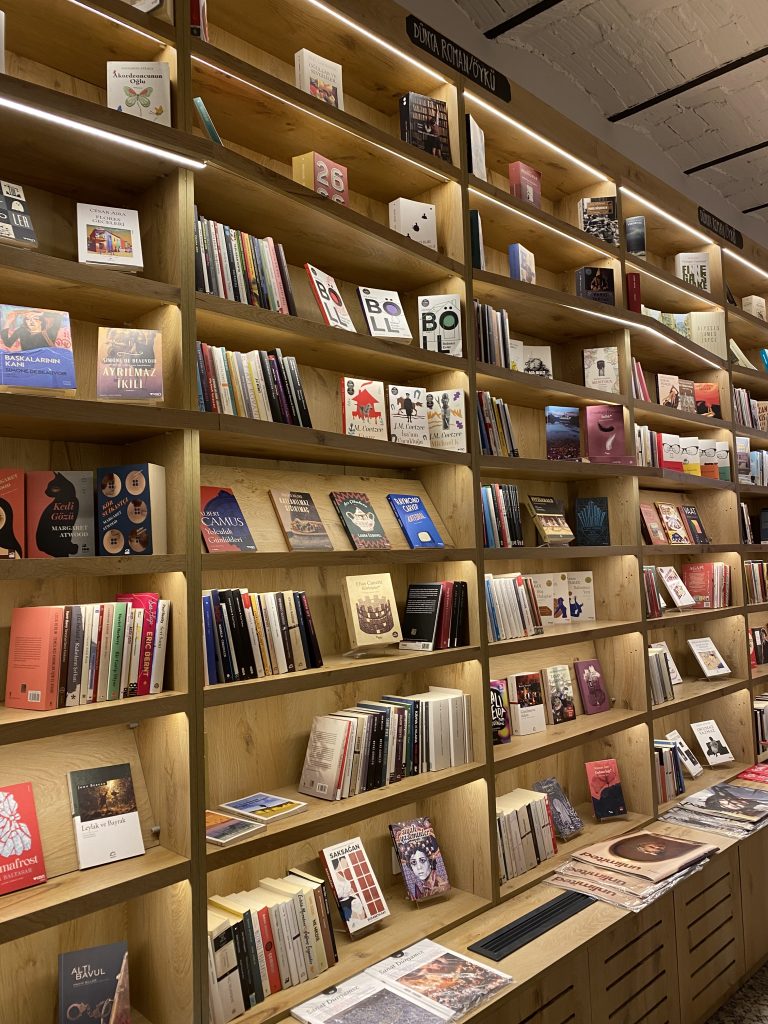
On one of the first days I was in Istanbul, I was exploring the neighborhood around our accommodations and I happened to pass a really neat book store. There were two small tables on the outside of the bookstore and when I peered through the windows, I saw the shelves were lined with feminist novels and art books in many different of languages. Since my project centers around art books and literature in Istanbul, I became very intrigued.  

After this first encounter, I knew I would have to come back to learn more about this interesting institution. This bookstore, Frankestayn Kitabevi, as I would later learn, was opened by Asye Tumerkan in 2022 when she realized there was no place in Istanbul that carried novels centered around feminism and queerness. As one of the only bookstores in Turkey, and definitely Istanbul, that centers around selling books related to feminist and queer literature, Frankestayn connects writers and readers with books they might not have otherwise encountered. Asye told me during our interview that one of the most important parts of opening this bookstore was that it was a place not only for people to be exposed to new and radical forms of literature, but that the bookstore could host events by and for the queer community of Istanbul. 

In comparison to the rest of Turkey, Istanbul is a relatively safe place to be queer and feminist, however, there exist very few places that allow for queerness and community to be built around literature in such a public and open way. Through poetry readings, open mic nights, book clubs, and other events, Frankestayn Kitabevi helps the queer community of Istanbul have a place they can meet gather and learn together. It is also one of the only places in Istanbul where one can buy small-print run artist books by various local independent publishers and artists.  

Being able to interview Asye and learn more about her experiences and life within the publishing realm helped me learn more about art, literature, publishing, and community in Istanbul in a way that was very nuanced. 

Research and Exploration in Istanbul

By Yara Hamdan

We began our day at Sultanahmet with a classic Turkish breakfast, savoring the flavors of simit, kaymak, and olives among the area’s historic beauty. We continued our adventure in Karaköy with a meze feast, where I had the opportunity to get to know my other Tufts colleagues better. We traveled to Kadıköy by ferry over the Bosphorus, where we enjoyed delicious street cuisine and sweet pastries while taking in the lively environment. The day ended with a stunning view from Terasse Nuit, with the city’s lights glimmering below, perfectly capturing the essence of friendship, food discovery, and Istanbul’s ageless charm.


It was helpful to meet the vice president of the DiSK labor union in Istanbul, as it highlighted the important role that women play in Turkey’s workforce. I learned more about the difficulties and advancements in the cause of women’s rights and equality in the workplace from our conversation. It was interesting to learn about the programmes run by DiSK to support women’s involvement in a variety of industries and to empower them; these efforts underscore the continuous efforts to make Turkey’s workplaces equitable and inclusive. He also gave me internal reports made for women’s day this year with helpful information for my research project.


Through interviewing a female American sociology professor at Özyeğin University, I learned important information about women’s roles and obstacles in the Turkish workforce. She shed light on the complex issues surrounding gender equality, discrimination, and opportunities for women in a variety of areas through her knowledge and experiences. My understanding of the systemic obstacles and struggles many women face, despite advancements in some areas, has increased as a result of learning about the socioeconomic and cultural influences on women’s participation in the labor. Her viewpoint emphasized the continued significance of advocacy, education, and policy reforms to establish more equal and encouraging work settings for women in Turkey.

Turkey’s Russian Expat Community

By: Martynas Ramanauskas

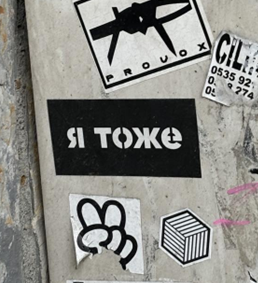
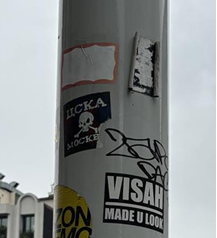
Russian stickers around Istanbul. The one the left reads “me too.” The one on the right is the insignia of a Moscow-based basketball ultra. The prevalence of such stickers I noticed by accident is indicative of a strong presence of Russians within this city. 
This image has an empty alt attribute; its file name is image.png

After landing in Istanbul, we found ourselves in the middle of Galata – a lively, central neighborhood of this massive city. Having had enough time to explore and get a feel for Europe’s largest city, I started researching Turkey’s policies towards the Russian invasion of Ukraine and how this compares to the locals’ attitudes, and how the war as a whole has affected Turkey.  

Residing in one of Istanbul’s more international neighborhoods, I couldn’t help but notice the plethora of languages being spoken by passers-by in the streets – the most common of which is Russian. Due to travel restrictions imposed by the EU, more Russian tourists than ever before have set their sights on Turkey, resulting in a huge surge of visitors. But not all of the Russian speakers I’ve overheard are here temporarily. There were tens of thousands who voted in the Russian presidential election at the Russian embassy.   

Anecdotally, speaking to a Russian expat working in a restaurant I visited, I learned that, to the best of her knowledge, most of the Russians in Turkey are representatives of the numerous ethnic minorities within the world’s largest country. These people, while Russian citizens, predominantly live outside of the largest cities of Moscow and St. Petersburg, and are said to be receiving draft orders at a much higher rate than the inhabitants of Russia’s richest metropolises. They have to move to Turkey with their families to avoid being sent to the front lines. Because the Russians who have moved to Turkey come from extremely diverse backgrounds – their unifying quality is their citizenship, which they embrace while living abroad to find community, even though it differentiates them in their homeland.  

Turkish Nationalism and Palestinian Solidarity

By Soliman Aboutaam

Although I am focusing on Palestinian solidarity in Turkey, it seems that nationalism and Palestinian solidarity are intertwined as two different extensions of a very politically charged city.  

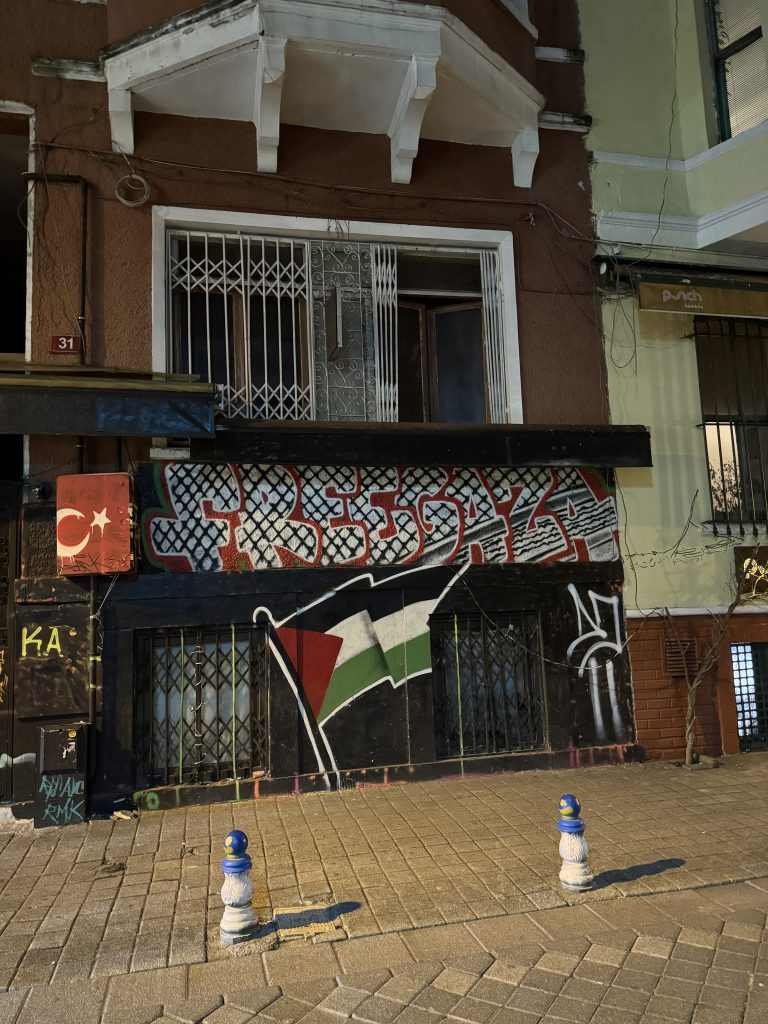
After only two days, I have photographed over 20 different signs and murals that support the Palestinian cause, from the more typical “Free Palestine” posters to pictures of ragged, displaced Gazan children to “Terrorist Israel.” However, between these posters I found hundreds of bright, red Turkish flags and flyers for the upcoming district elections, with zoomed in faces of the candidates. 

The reasons for this physical juxtaposition became more evident after interviewing a number of members of the ultra-nationalist, anti-immigrant “Zafer Partisi” group. When I asked a member about one of their stances on Palestinian solidarity in Turkey, they said that they support the Palestinian people and their fight for freedom, but that letting one million Palestinian refugees into the country, as President Erdogan has proposed, would be a threat to the identity of the Turkish people. 

Similarly, letting Syrians in would also not be ok because “we don’t have enough money to support them…we don’t have enough food and infrastructure.” Another member compared the efforts of the Kurdistan Workers’ Party (PKK), who they vehemently disapproved of, and called “traitors” with no benefits to their cause, to the actions of Hamas. Yet, they called Hamas freedom fighters and said that they would have fought for them too if born in the same circumstances. Ironically, both groups state the same mission of creating a state for their stateless people.  

It seems that for some in Turkey, Turkish nationalism and considerations of Turkish foreign and domestic policy, outweigh the practicalities of Palestinian refugees, if not the sentiments. 

Oslo Freedom Forum: Gender and Human Rights

By: Abigail Elsbree

Among the many new concepts that I learned during my three days at the Oslo Freedom Forum, I was particularly interested in the term “gender apartheid.” I first heard it used during an afternoon panel on the first day titled “Iran: The Final Revolution?” Human rights attorney Gissou Nia defined gender apartheid by reminding the audience that an apartheid is “the domination of one group over another in order to cement power relations,” and then adding that in the context of gender, an apartheid is “sex segregation to maintain a regime.” Unfortunately, gender apartheid is currently not criminalized under international law, even though racial apartheid is. However, Nia shared that the Convention on Prevention and Punishment of Crimes against Humanity is currently occurring, and with enough advocacy and education, gender apartheid could get included in the convention, and then be used to hold Iran accountable for their heavy repression of Iranian women. 

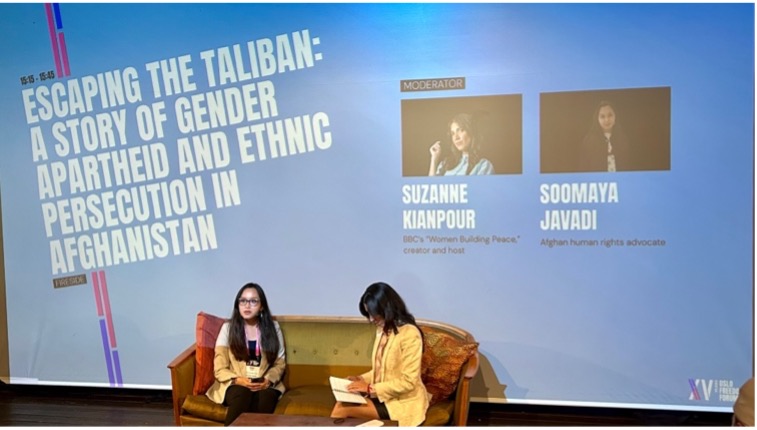
Another mention of gender apartheid came on day three of the conference, during a conversation between Afghan activist and Hazara woman, Soomaya Javadi, and BBC commentator Suzanne Kianpour. Javadi built the case of an ongoing gender apartheid by providing many examples of the Taliban’s violence and mistreatment toward women, such as the 2020 attack at a maternity hospital in the majority Hazara area of West Kabul, where 16 mothers were killed. Javadi also brought light to a 2022 suicide bombing in a West Kabul classroom that killed 35 Hazara women and girls, as well as her personal experiences being forced to wear a veil. When asked why the Taliban goes after women specifically, Javadi explained that women pose a threat to the Taliban should they gain education and a platform in society to where their voices are heard. In this way, the actions of the Taliban line right up with Nia’s definition of gender apartheid, as the Taliban subjugates women in order to ensure the success of the regime.

After learning about the term gender apartheid, I could not help but consider what other stories from OFF 2023 could possibly fall under the definition as well. In addition to being a racial apartheid and genocide, the Chinese government’s treatment of its Uyghur peoples has put the Uyghur women at the disposal of the CCP. In her remarks on the main stage, Uyghur woman and camp survivor Gulbahar Haitiwaji painfully shared that many Uyghur women are forced to sexually entertain male “Han relatives” who come to Uyghur women’s houses when the men of the family are detained in the camps. This sexual exchange is an example of the Chinese government dominating Uyghurs, and specifically Uyghur women, by forcing them into relations.

Another potential example of gender apartheid may be found in some of the African state where women are not granted property rights. Speaking on a panel about the issue, Atlas group member and Sudanese woman Magatte Wade shared that “if you are about human rights, you must be about property rights,” since disallowing women financial freedoms such as the opportunity to build independent wealth has been demonstrated to keep them in abusive relationships, and push women into deep poverty if they become widowed. Also on the panel, Aimable Manirakiza shared that before his group’s efforts, it was written into Burundi law that women did not have property rights, effectively rendering them second class citizens. In the aftermath of OFF, I plan to look more into the potential for gender apartheid being added into the Convention on Prevention and Punishment of Crimes against Humanity. While simply labelling a situation a “gender apartheid” does not automatically push regimes towards equality, it may be a crucial first step toward accountability and justice among the international community.