Reflecting on WIIR’s time in Ireland, and Conducting One Last Interview

By Madison Bradford

June 4th was the last day of our trip, with most of us heading out in the early hours of the morning to catch their flights out of Ireland. However, Mika and myself are staying a few days extra to go visit my family, which ended up being quite useful for us. 

In the morning, we said a tearful goodbye to the girls from the trip as they headed out. Though it was sad to see them go, I am happy to say this sadness was only because we all got along so well. Before the trip, most of us had only spoken a few times at meetings and events for WIIR, so I was incredibly grateful for the quick friendship which emerged amongst all the girls. 

After they left, Mika and I had our final interview, with journalist Una Mullally. Lauren Lovelace, an alumna from Tufts, was the one to connect us with Una. Una was actually out of town until late Monday night, so luckily, since Mika and I stayed a little longer, we were able to meet up with her in the afternoon on Tuesday. The meeting went very well – it was interesting to talk to someone who was so well-versed in the social and political climate of Ireland. Moreover, because Una does not work for any specific organization, she was free to say her actual opinions. She was honest with us about issues of discrimination and the housing crisis in Ireland, and went into their causes and possible effects. She also talked for a bit about the United States and explained the unique circumstances of Ireland and how they cause nuanced differences between racism in the US versus Ireland. We ended the conversation by speaking about the women’s rights movement in Ireland, and how she felt that there is a possibility for the right of abortion to eventually become more inclusive in Ireland. For privacy, Una did not have us take photos, but the visit was wonderful and we took loads of notes. 

Now that the trip is over, I am on the train to the countryside. I am incredibly grateful to IGL for the opportunity of this trip. I learned an incredible amount from so many different people, and I made memories that will last forever. Now, I am actually quite excited to go home and get to writing my paper, as I have become more and more informed and inspired this past week.

Latin American Stories Present in the Oslo Freedom Forum

by Ariadna Condezo Trinidad

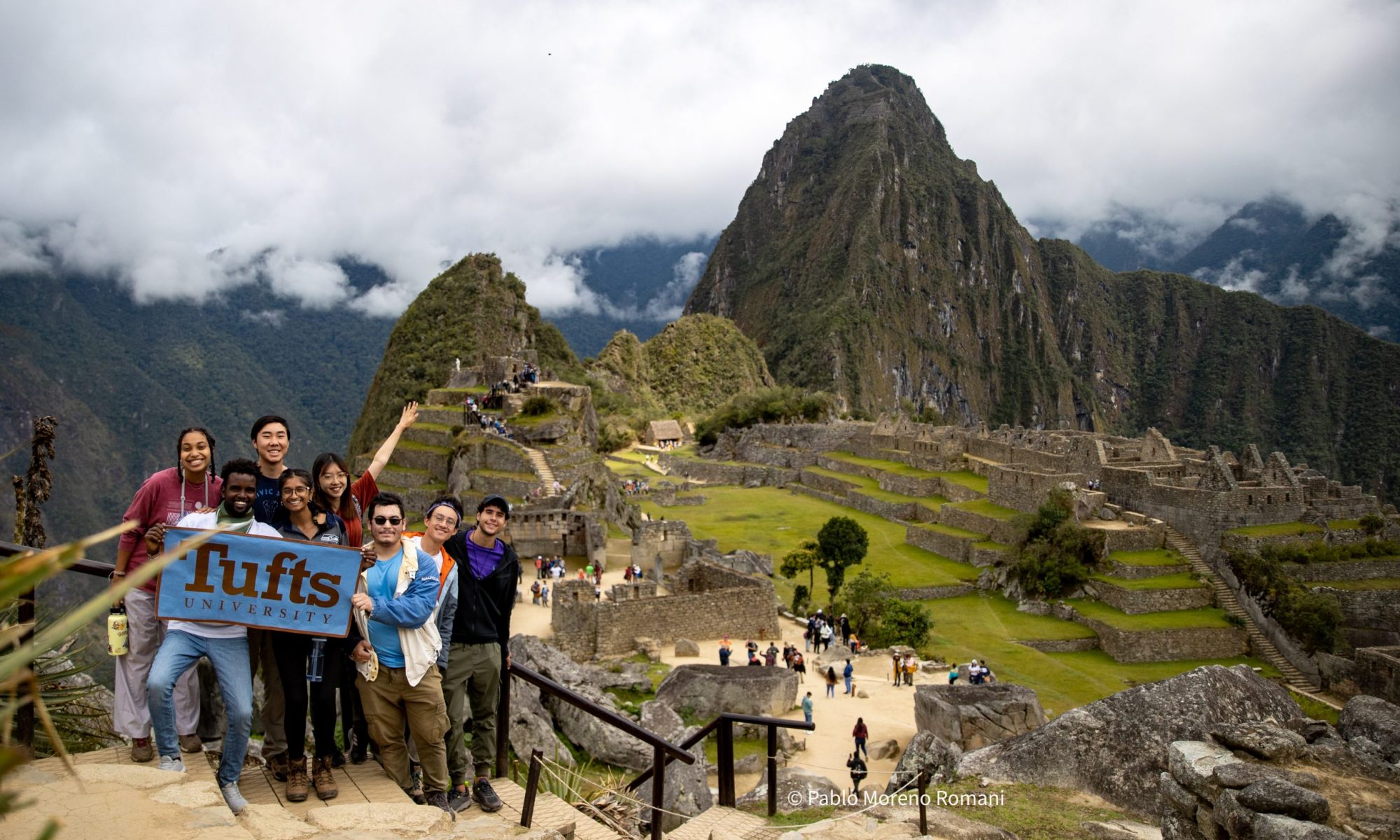
I arrived in Oslo a day before the conference started. The Oslo Freedom Forum (OFF) is an international human rights conference that brings together human rights activists, journalists, world leaders, and other important stakeholders. I attended the forum with other Tufts undergraduates. During the three days of the conference, I got the opportunity to hear the stories and testimonies of prominent activists who are fighting against authoritarian regimes in their home countries. As an Oslo Scholar, I was grateful to be able to hear inspirational stories that reaffirm my commitment in working with human rights in the future and I was also motivated by hearing stories from Latin American activists —I was born and raised in Peru— since I want to focus my career in Latin American affairs.


One of the first surprises I got from the OFF was hearing Marina Corina Machado, leader of the opposition in Venezuela. She stated that more than 80% of the population in Venezuela want change. “This has turned much more than an electoral struggle, this has turned into an ethical, an existential, and even a spiritual fight for dignity, for freedom, and for having our children come back home.” Her words deeply impacted me. The fight for democracy in Venezuela is something I grew up watching in the news. It is something that I witnessed as thousands of people emigrated from Venezuela to Peru. It is something that I heard from my neighbors in Peru. During the last months, I have seen in the news that Venezuelans have hope for change and they are counting on Marina Corina to lead the country out of the hands of the authoritarian regime of Nicolas Maduro. The opposition has been able to mobilize the whole country and restore hope for a free Venezuela. As the electoral votes are being counted, it has been emotional to watch the country to not give up despite the government attempts to prevent a fair election such as changing people’s voting locations, closing the land border with Colombia, or canceling flights of former leaders of multiple Latin American countries who would act as observers during the election process.


The other story was from Carlos Chamorro, a Nicaraguan journalist in exile. Carlos Chamorro has faced harassment during years due to his work in his newspaper Confidencial, which exposes the dictatorship’s abuses. He was eventually forced into exile for his safety. He began the story by giving background information on the Nicaragua dictatorship led by Daniel Ortega. He talked about the 2018 protests were the dictatorship responded with a bloody massacre that took the lives of 350 people. He mentioned how in 2021, Ortega put in prison the seven aspiring political candidates of the opposition in order to eliminate competition. So far during the dictatorship 317 people have been declared stateless, including 222 former political prisoners, political and civil leaders, human rights activisits, students, more than 15 journalists, and more. Chamorro was declared stateless by the dictatorship in 2023. Chamorro’s story is inspirational because he still fights for a Nicaragua that will be a republic again, he continues to perform his journalism in order to maintained the world informed of the human rights abuses happening in Nicaragua and the struggles of the people who live under the dictatorship.

Researching the Experiences of Muslim Women in Ireland

Today was our last full day in Dublin! Time really flew by on this trip. Though I am sad to be leaving tomorrow, I am endlessly grateful to have been on this trip, as I have made such strong connections with the women around me that I will cherish for the rest of my time at Tufts, and additionally I have learned so much about Ireland which has significantly strengthened my understanding of the world around me. Our group covered a variety of topics; religion, abortion, refugee integration, immigration, peace-building, and economic construction, which has been truly fascinating to learn about through an Irish lens. My topic was specifically about the socio-political experiences of Muslim women in Ireland. Every single interview, regardless of the topic, taught me an immense amount, contributing to my knowledge of various facets of international relations in Ireland. 

In Ireland, June 3rd is a national bank holiday, so although it was a Monday, we were only able to schedule one interview for the day, as most people do not work on bank holiday. At 12pm, Mika and I interviewed Dr. Lilian Nwanze from Maynooth University over Zoom. Olivia, whose research focuses on the eighth amendment and access to abortion, previously organized a meeting with Dr. Camilla Fitzsimmons at Maynooth on May 28th, who works closely with Dr. Nwanze, specifically on research regarding migrants and Muslim women, which was especially pertinent to mine and Mika’s research. Dr. Nwanze’s doctoral research was centered around the experiences of Black migrant women in Ireland, and is currently working on anti-racist pedagogy for use in Irish Adult Education. Although we met over Zoom due to the holiday, the meeting was an amazing experience, and Dr. Nwanze’s research will serve as essential to my long-form narrative on the experiences of Muslim women. Although Muslim women are not Dr. Nwanze’s speciality in research, she and Dr. Fitzsimmons collaborated together with Amal Women’s Association, an NGO we previously met with, on research which explored the experiences of Muslim Women in Irish maternity settings. What stuck with me the most from this conversation was that although black and Muslim women experience discrimination differently, what interconnects both forms of racism is the way both groups are highly visible, but simultaneously invisible. Dr. Nwanze explained that both Black and Muslim Hijabi women are clearly visible as “different” than the majority of the Irish population, placing them at a higher level of vulnerability than other groups. This visibility often causes Muslim women to be deemed as “foreign” or inherently “different” to white Irish women, causing many prejudiced Irish individuals to discriminate against them. This meeting was a great final interview to conclude our research trip, and Dr. Nwanze was incredibly knowledgeable on the role of race in education, religion in Ireland, and discrimination studies as a whole, and I am extremely grateful to have had the opportunity to meet her. 

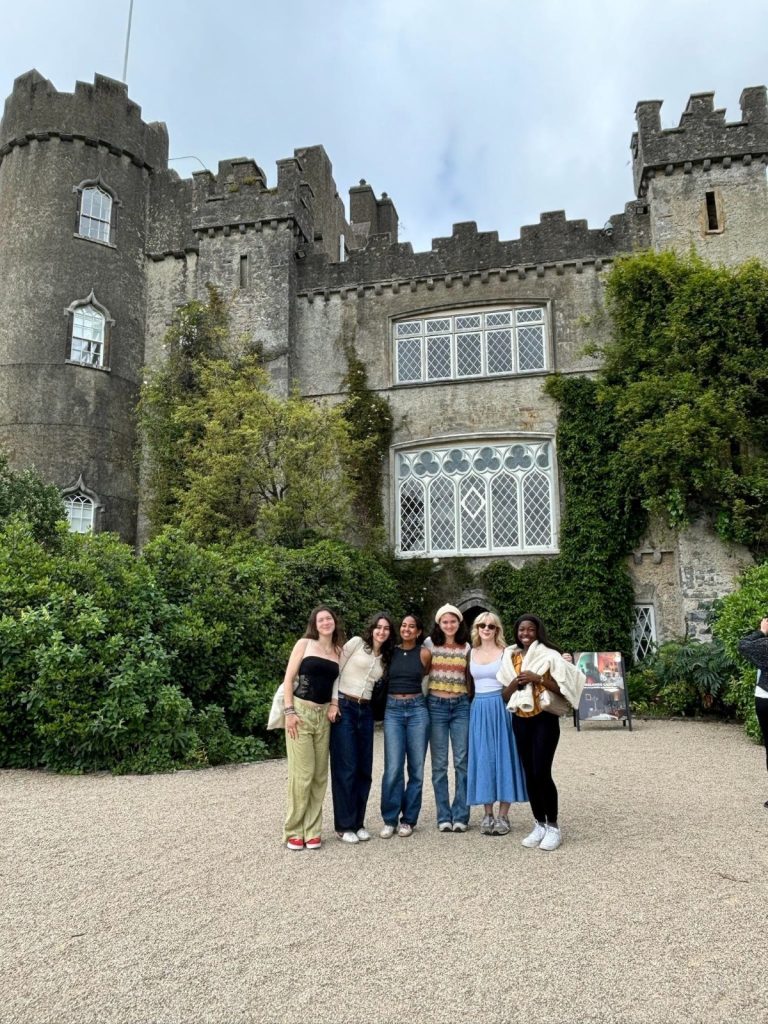
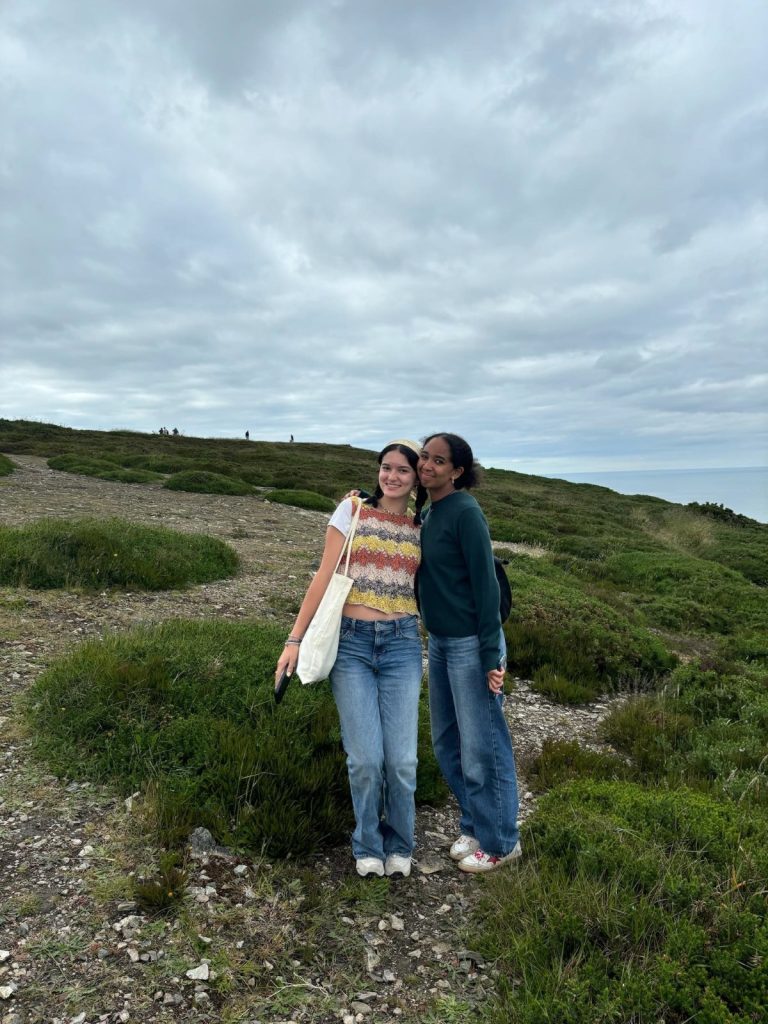
After this interview, we headed to Malahide Castle, a beautiful historical site located slightly outside of Dublin. We went on a guided tour which was very interesting, as our tour guide was highly knowledgeable on the stories behind each room of the castle, and it was great to experience history firsthand. The grounds were breathtaking, and Malahide Castle was one of the highlights of the trip for many of us! Fun fact; Malahide Castle is known to have at least five ghosts in residence, making it one of the most haunted castles in Ireland… After Malahide, we took a quick trip to the Howth cliffs, which was the highlight of my day. The views were truly stunning, and it was nice to be in nature after being in the city for around 8 days. I am really glad we got to explore parts of Dublin that we had not been to yet on our last day, which was an amazing way to wrap up this trip!

Exploring Belfast and Irish History

By Sophia Gaitanis

Although not a day of meetings and formal research, our fifth day of the trip had no shortage of academic exploration and discovery. We started our day by venturing outside Dublin to explore Belfast— a city in Northern Ireland, U.K. with a deep history in the struggles between Irish and British individuals we were eager to learn more about. On the way over, we admired the Irish countryside and small towns/farms that we did not have the opportunity to admire in Dublin. Eventually, the vibrant countryside faded into a historic city.  When we first arrived, it became apparent we had left the country. The juxtaposition of U.K. flags and Protestant churches along with Irish flags and Catholic Churches gave us insight into the complex history and identity of Belfast.  

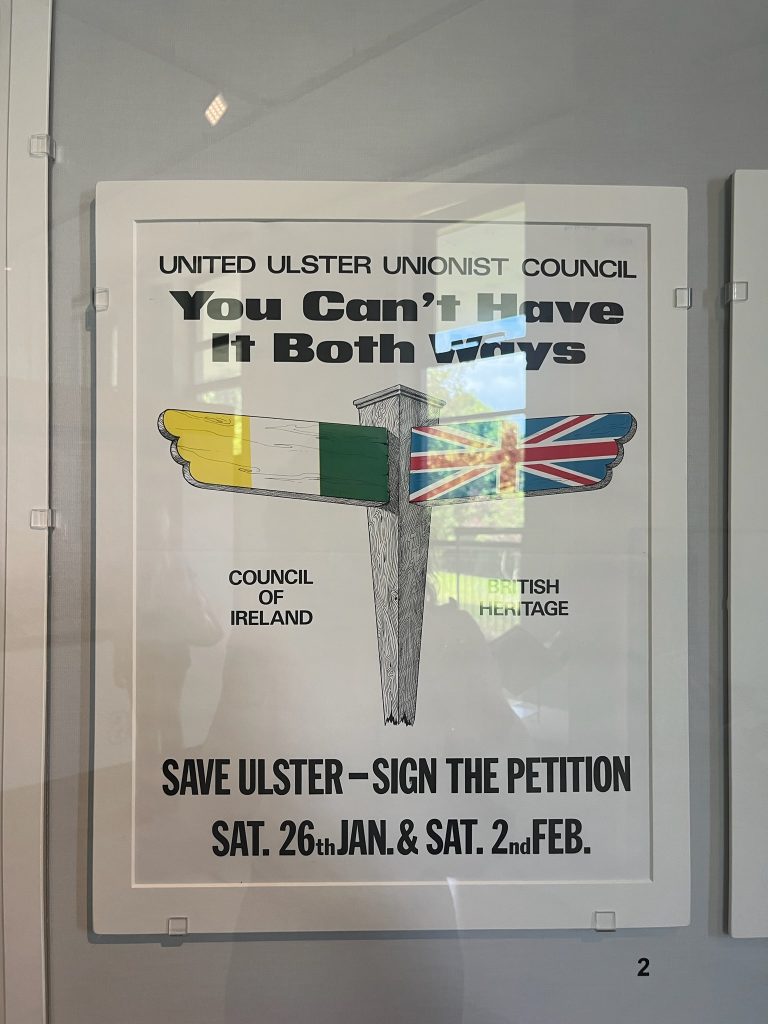
Shortly, we made our way over to the Ulster Museum to explore their exhibition on “The Troubles”–the period of ethnic conflict within Northern Ireland starting in the 1960s. I was vaguely familiar with the hostility between Britain and Ireland along with Britain’s history of imperial control of Ireland, but I was eager to learn more details and specific stories. I learned more about the ethno-religious conflict that contributed to the building tensions between the British and Irish. By 1960, these distinct identities contributed to battling political identities– with many Protestants advocating for Northern Ireland to remain a part of the United Kingdom and Irish nationalists advocating for reunification with Ireland. The Museum included many personal stories of the impact of violence on everyday life, along with examples of how revolutionary ideology was spread by each side to justify their cause.  

What struck me most when learning about The Troubles was its connection to broader Civil Rights, Women’s, and liberal movements in the 60’s. For women in particular, I was surprised to learn of their role in the revolution which was an extension of broader movements for women’s rights. For example, the exhibit showcased copies of pages within an Irish nationalist Declaration specifically written and signed by women. Another book entitled “A Call to the Women of Ireland” was included in the exhibit, which highlighted the role of women in spreading the ideology of the movement. Another video in the exhibition detailed how the U.S. Civil Rights Movement created momentum in the Irish nationalist cause. Much like the Civil Rights Movement, I learned of the crucial role of Irish students in raising awareness and fighting for their cause. Furthermore, many artifacts detailed the parallel Unionist movement during The Troubles, which the Irish used to build support for the Nationalist cause. These simultaneous movements and their role in the broader cause of the Troubles uniquely contextualized this conflict within the broader movements of the ‘60s and how they related with each other to impact all movements. Although the violence of The Troubles is over, more than 20 years later the contentious relations between Protestants and Catholics and their respective disagreements within Northern Ireland are still apparent. My exploration both inside and outside the museum made me realize there is still much work to be done and conversations to be had regarding the ethno-religious relations in Northern Ireland.  

Learning More on Conflict Resolution and Civil Liberties in Ireland

By Olivia Ballentine

Today was our fifth full day in Dublin, Ireland. In less than a week, our group of dedicated and passionate female students has become very intimate and it has been extremely exciting to bond over new shared experiences. (Obviously when six girls are put in a small hostel room, it can only go one of two ways). Additionally, as a rising sophomore surrounded by upperclassmen, I feel very lucky and inspired by my intelligent peers on this trip, especially as I observe their dedication and passion to furthering their knowledge of International Relations. 

Although I have still not decided my major at Tufts, being a member of WIIR (Women in IR), has uplifted me academically in the past year. Especially during this trip, the people of this club have inspired me to be more ambitious with less fear about being curious and asking the questions that matter to me. 

To start our day off, Madison, Oyinkansola, and I met with Susan Miner, a volunteer with Alternatives to Violence Project (AVP) at a nearby cafe for some coffee and brunch. After introducing ourselves, Susan provided us with context about her background and involvement with her organization as a volunteer. It was incredibly interesting to learn about her experience as an American who has lived in Dublin for over 30 years, and her motivations for staying after completing her Masters degree at University College Dublin. I found her reflections on her work in prisons particularly interesting, as she distinguished much of the differences between male and female incarceration. Women, more often than not, will serve less time, yet their absence is incredibly disruptive when leaving behind a family, job, and home. Furthermore, we discussed her approaches for community building and her time spent with incarcerated individuals. 

Conflict resolution, she stressed, is best tackled when a relationship is built between two people, no matter their identity, and when the connection is building on an understanding of empathy and respect. These words stuck with me for the rest of the day, especially thinking about our group’s collective interest in the refugee/migrant experience in Ireland. 

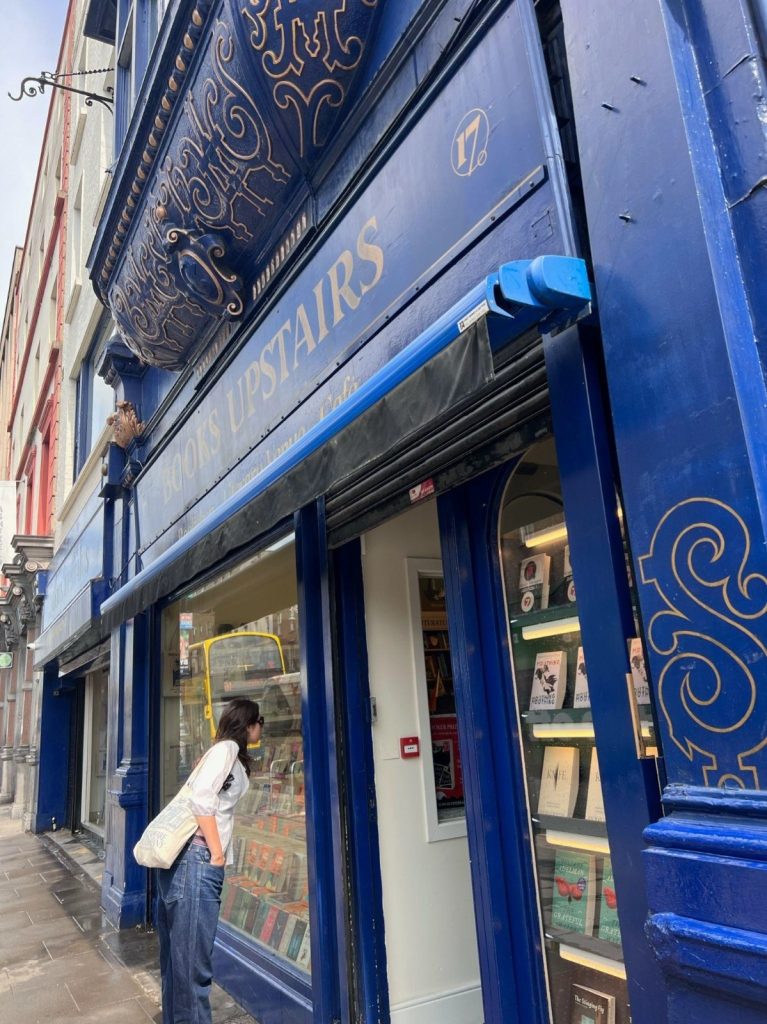
Afterwards, Madison and I started our bookstore crawl, beginning with Books Upstairs, located very close to Trinity College! I was mesmerized by the beautiful blue storefront, and inviting inside. I found their selection of Irish and Feminist literature to be particularly vast, and decided on buying Bellies, which is a recent novel written by transgender author Nicola Dinan. Afterwards, we took a short walk to the Oscar Wilde house at One Merrion Square. This historical building was the childhood home of Wilde and where he lived even during his first year of university at Trinity. Most of the rooms were still decorated with the old furniture and details of the home, and I especially enjoyed the peaceful library on the first floor of the house. 

At three pm, Madison, Maya, and I headed to the Irish Council of Civil Liberties office in Temple bar to meet with Luna Liboni and Ronan Kennedy. Our conversation was extremely insightful, and after having met with several grassroots organizations earlier in the week, it was refreshing to speak with an organization that does more policy work. Ronan and Luna were especially informative on the inner workings of hate crime and discrimination legislation in Ireland. It was evident that their tireless dedication to their organization comes from both a personal and professional inspiration for social justice in their country. We are so thankful for their generosity and hospitality during our time in their office. To finish the day, we checked out Connolly Books, as per the suggestion of Ronan, which is known as Ireland’s oldest Radical bookshop. I enjoyed their selection of Palestinian and Irish literature as well as various stickers, pins, and posters. 

Tomorrow, we will go on a day trip to Belfast, and I am even more excited to explore what this new city has to offer in the arts, culture, and society! 

On the Ground Research and Meetings in Dublin

By Oyinkansola Akin-Olugbade

On Day 4 of our Women in Ireland trip, it is safe to say we have mastered our approach and routine. Our first stop of the day was meeting with representatives of the Women Federation for World Peace, Ireland. We met at the Belvedere Hotel because they underwent renovations at their Ireland chapter location nicknamed the Peace Embassy. We settled in around a coffee table in a secluded room of the restaurant, which they have converted as their temporary office location. We were attended to by the President, Vice-President, and their Youth Leader. They seemed enthusiastic about meeting us, learning more about our research interests and our work while in Ireland, and echoed the sentiments they had shared earlier about presenting our current findings at a makeshift conference they would organize early next week. We had our usual roundtable explanations about the purpose of the IGL, the Women in International Relations club, and how we received alumni funding to pursue issues pertinent to women on a global scale which led us to choosing Ireland. I usually delve into my research interests in Irish Women in Post-Conflict Economic Reconstruction and how my topic has consistently evolved after each day of meeting such impressive women. Throughout the meeting, they had inquisitive questions about each of our research topics and expressed curiosity. Meanwhile, I learned how diverse cultural perspectives helped explain peaceful transitions and how women engaged in peace should act to bridge more gaps and open avenues for conversation. They also started an initiative that turned into an overarching ideology called “Peace starts with me” which focused on starting at the individual and growing grassroots movements. Our interactions with them were enlightening as it was a welcomed introduction to different opinions as they challenged some of our biases within our research interests.

Unfortunately, Sophia, Olivia, and I left early to make our second appointment of the day with a PhD student focused on development and gender economics and serves as a Research Scholar at Trinity College. I was particularly excited about this encounter as this was a meeting that would answer my gaps of knowledge from an economic perspective. Although she did not have specific knowledge of communities in Ireland, her prior research experience with marginalized communities as well as prior work in gender economics were still helpful to me. Understanding how simply creating jobs and employment opportunities is not sufficient, especially to secure women’s place in the workforce, and how there must be more done at the educational level to tackle the backlash they most often receive from their communities and from society for putting themselves first was just one of the many topics we covered regarding challenging those deep rooted and hindering social norms.

Our last meeting of the day gave us the jolt of energy needed after a long day of back-to-back appointments. On the outskirts of town, about 45 minutes from downtown Dublin, lies the Ronanstown chapter of the Women’s Collective Ireland. We were privileged to discover more about the organization’s missions in women’s empowerment and building their capacity where they already boast a reach of 36,000 women across 17 chapters island wide. We were touched by the testimonies they shared about individual outreach events such as creating crafts-centered events to bridge the language barriers with recently immigrated communities. For my research interests, their report on bridging women and grassroots bonding throughout the island was helpful in understanding the stark differences between the rights, knowledge, and approaches of women in North and South Ireland. We left that encounter refreshed, and enlightened, with more supportive research for our respective topics and some cool merch too!

Our fourth day was once again filled with meeting and learning from women who are doing diverse, important, and impactful work with one common purpose: women’s empowerment. As I sit here reflecting on my day, I am once again excited and anxious to continue shaping and tweaking my research to reflect the wealth of knowledge bestowed on me through these personal, one on one connections on the ground which I, along with my peers, am fortunate to have.