The Study of Migration in Mexico City: A Journey of Inspiration

by Dzheveira Karimova

The research trip to Mexico City was an immense success, both for my academic goals and personal growth. Throughout my stay, I was captivated by the city’s vibrant culture and the warmth of its people. The continuous friendliness, hospitality, and kindness we experienced—from the locals at the markets to the individuals I interviewed—were truly heartwarming.

My research centers on migration trends to Mexico City, examining its role as a crucial hub for refugees and migrants en route to the United States. Additionally, I investigate the resources available to these individuals and the contributions of the government, NGOs, and civil society in supporting them.

During my trip to Mexico City, I had the honor of interviewing esteemed professors, researchers, and activists at local universities. I am deeply grateful to Dr. Tigau, Professor Diaz, and Dr. Zavala de Cosío for meeting with me at the National Autonomous University of Mexico (UNAM) and El Colegio de México. Our conversations were incredibly informative, shedding light on current migration trends, the growing impact of the city’s water crisis on migration attitudes, the effects of the CBP One application, and the influence of both Mexican presidential debates and the upcoming US elections on migration policies and trends.

Mexico City afforded me incredible opportunities to connect with esteemed professionals and inspiring individuals in the field of migration. After taking a chance and emailing the general address of the Office of the United Nations High Commissioner for Refugees in Mexico, I was thrilled to receive a reply from Emilio Gonzalez, Senior Protection Assistant, and Alejandra Carillo, Head of the Mexico City Field Unit, regarding an interview. It was an honor to speak with such experts at the forefront of addressing migration issues in the city. Through our discussion, I gained valuable insights into recent migration from Venezuela, Central America, Haiti, and Afghanistan. Learning about UNHCR’s efforts in Mexico City, including their support for local organizations and advocacy within the government to increase awareness and support for migration challenges, was an extraordinary opportunity and is extremely valuable for my research.

The highlight of my research trip was visiting La Casa Tochan, the first migrant shelter in Mexico City. During my visit to this remarkable shelter, I had the privilege of interviewing Gabriela Hernández, the director and coordinator. Founded in 2011 due to the city’s lack of support for migrants, the shelter emerged from a collective effort by various organizations to provide accommodation and assistance when the government failed to do so. Gabriela shared insights into the growing migrant crisis in the city and the government’s inadequate response in opening new shelters to accommodate the increasing migrant and refugee population. We also discussed the shelter’s dynamics, with refugees arriving from Central America, Venezuela, Haiti, Afghanistan, Kurdistan, and China, and how the dedicated staff, including nurses, psychologists, and lawyers, manage to assist them despite language barriers. The visit to the shelter was truly inspiring. Conversations with Gabriela, the shelter staff, and volunteers were not only touching but also highly informative. Their dedication and perseverance in helping refugees in the city, despite the lack of funding and resources, is truly remarkable.

I am immensely grateful for the opportunity to conduct such vital research in Mexico City, and I am deeply thankful for this life-changing experience.
First Impressions of Nepal

By Ishika Gupta

On May 15th, our South Asian Regional Committee (SARC) group left Boston for Nepal. Though excited, the five of us were filled with anxieties about our trip – with a 17 hour layover in Doha, we were in for approximately 35 hours of travel. Though I was nervous, while in Doha our group bonded quickly, and when we landed in Nepal, it was clear that we felt comfortable with each other and our minds were more at ease.

My first impression of Nepal was characterized by the hospitality we saw right outside the airport and during the first days of our trip. Hanshika, one of the members of our group and a Nepali, ran into her school friend, Ayushka, on the flight. She was immediately very friendly to all of us, and waited patiently for the entire group as we spent time applying and paying for visas, and standing in the immigration line. Ayushka offered to take pictures of our group, and as soon as we stepped out of the airport, we saw her family waiting enthusiastically for her arrival. As Hanshika spoke with the cab drivers, Ayushka’s family also welcomed us to Nepal and wished us well.

Though we did have a difficult start to our trip – having to change hotels – the Nepali hospitality continued throughout the first days of our trip. As we ate breakfast the first morning in our new hotel, we chatted with the owner as she welcomed us and gave us recommendations on what to see nearby. Hanshika, though a member of our group, has become our wonderful tour guide – showing us all the best spots, explaining Nepali customs to us, and answering our silly questions. We are also so excited to meet her family over dinner! So, even though I was anxious in the days prior to our travel, due to the supportive dynamic of our group and the hospitality I have experienced in Nepal, I am feeling more stress-free and excited about continuing our journey. Having heard stories about my parents’ travels to Nepal growing up, I have wanted to visit this country for so long, and am incredibly grateful for the opportunity to do so.

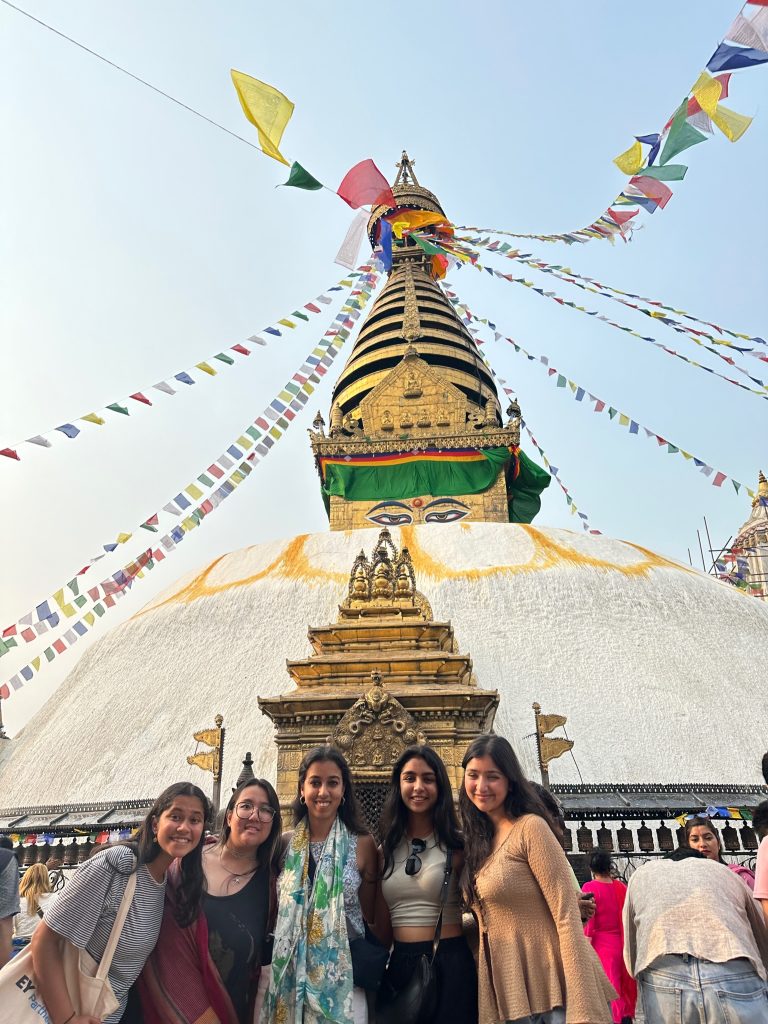
On our first two days here in Kathmandu, we explored the city, and even took a day trip to Nagarkot and Bhaktapur. Since it was a weekend, we were unable to conduct any interviews and instead took the time to become acquainted with our surroundings. On our first day, we walked around the Durbar Square in Patan, strolling through the countless shops and admiring the beautiful architecture. We were able to step inside a couple of temples, where we observed the intricate carvings, as well as religious statues decorated with fabrics and designs of numerous colors. Then, we stepped into a small museum, which housed several religious artifacts and exhibited the history of the square, as told by Henry Abrose Olfield, who was a British doctor and artist in the British residence in Kathmandu from 1850-1863. Afterwards, we had a discussion on the duality between this history, that of such a prominent landmark, being told by a British man, while so many stolen Nepali artifacts sit in British museums. After this and a quick lunch, we went to one of the most famous tourist attractions in Nepal – the Swoyambhu Machachaitya. Here, we saw many of the known colorful Nepali flags and temple, seen in many postcards and media across the world. Walking around, we saw the view of the entire city of Kathmandu. Especially at this location, I felt so appreciative of this opportunity! On our second day here, we took a day trip outside of the city, going to Nagarkot and Bhaktapur. In Nagarkot, we were able to see a scenic view of the mountains and enjoy a delicious lunch. Afterwards, we were able to walk around the town of Bhaktapur – where we were able to view the former royal palace and temple. We also walked around through the markets, and all bought postcards of important landmarks we had seen thus far.

Overall, though we haven’t formally begun our research, these first couple days have given us the opportunity to become acquainted with our surroundings in a more meaningful way, something that will most certainly aid us in our further academic pursuits. I look forward to my first interview tomorrow, which will be with Economic Development Professor Binayak Krishna Thapa at the Kathmandu University School of Arts, as I seek to explore my research topic: the exclusion of informal workers from Nepal’s social protection systems.

Agricultural Practices of the Chinampas in Xochimilco

by Victor Vazquez

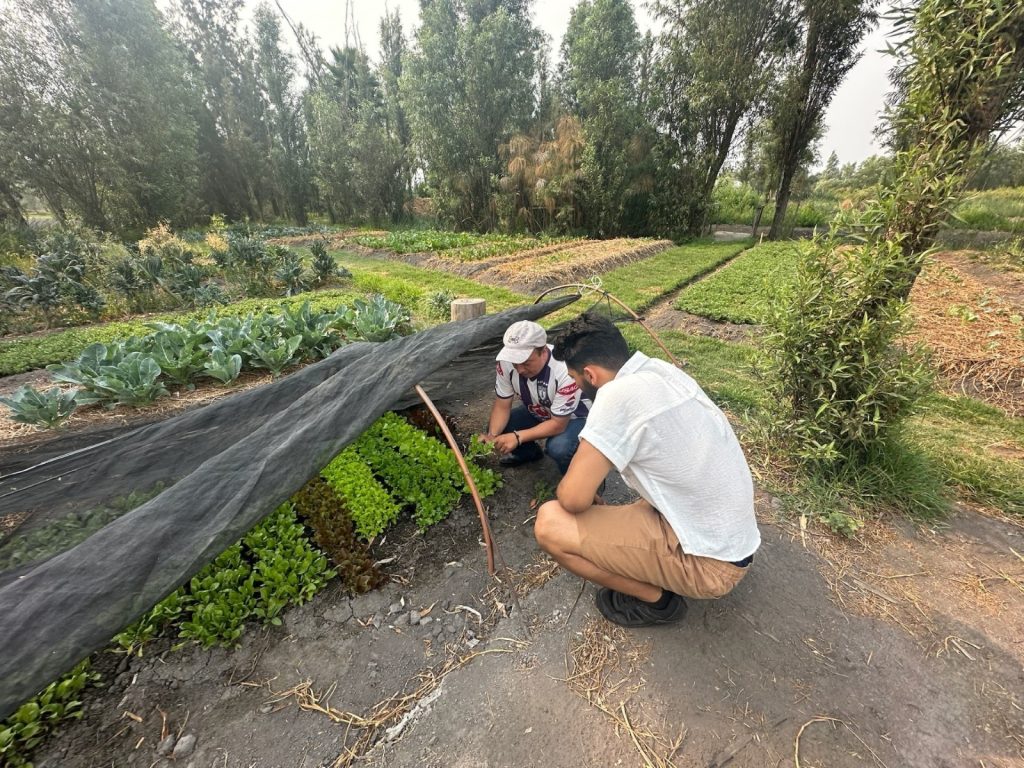
Chinampas are artificial islands that persisted in the Valley of Mexico for Millenia, the Aztecs came to the valley around the 13th to 14th century AD and mass produced chinampas to feed their empire. Chinampas were built by creating an underwater fence in a rectangular formation in a shallow lake area, and then filling the underwater fence with organic matter until it reached the desired height above the water level. These chinampas were used for intensive agriculture, with some 7 harvests per year at peak functionality. This form of agriculture persisted because of its high yield sustainable farming model. Fertile moist mud was brought from the bottom of the lake in order to reliably germinate seeds. The technique that the chinamperos (chinampa farmers) used to create nurseries was taking the mud and flattening it out in a 4in thick slab, the mud was cut into cubes and then they made a hole in the mud cube with their fingers and put the seed inside. This type of nursery is shown in the image below.

Chinampa nursery germinating lettuce

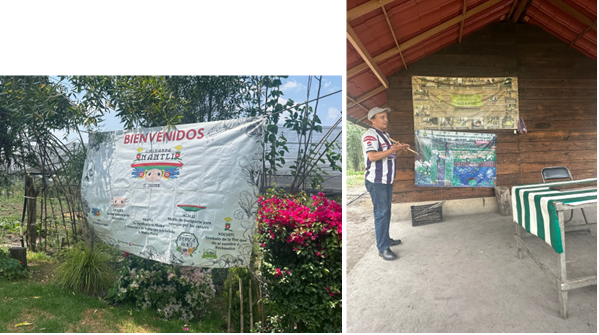
In order to get a better understanding of the current state of chinampas, I went to 2 organizations in Mexico City to look at the chinampas in Xochimilco. The 2 organizations were Olintalli and ChinampasXochimilco as shown in the images below. 

ChinampasXochimilco Banner (left) and Olintalli Banner/Presentation (right)

The main form of tourism that occurs in Xochimilco are the boat tours and party boats. The boat tours, which I chose, are informational tours that are meant to bring awareness to the problems happening in the chinampas of Xochimilco. The money is used to support the chinamperos that still farm on the chinampas and make a living from it. The party boats on the other hand are another issue that the chinampas face, since the tourists litter the water with plastic bottles and other toxic trash. The tourism allows money to flow within Xochimilco, but comes at an environmental cost, with a solution being difficult since money is necessary to build more traditional nurseries and other water treatment structures within Xochimilco, as well as food, since only a fraction of the chinampas available are used for food production. The image below shows an illegal settlement with trash and decreased water level.

Polluted chinampa with decreasing water levels

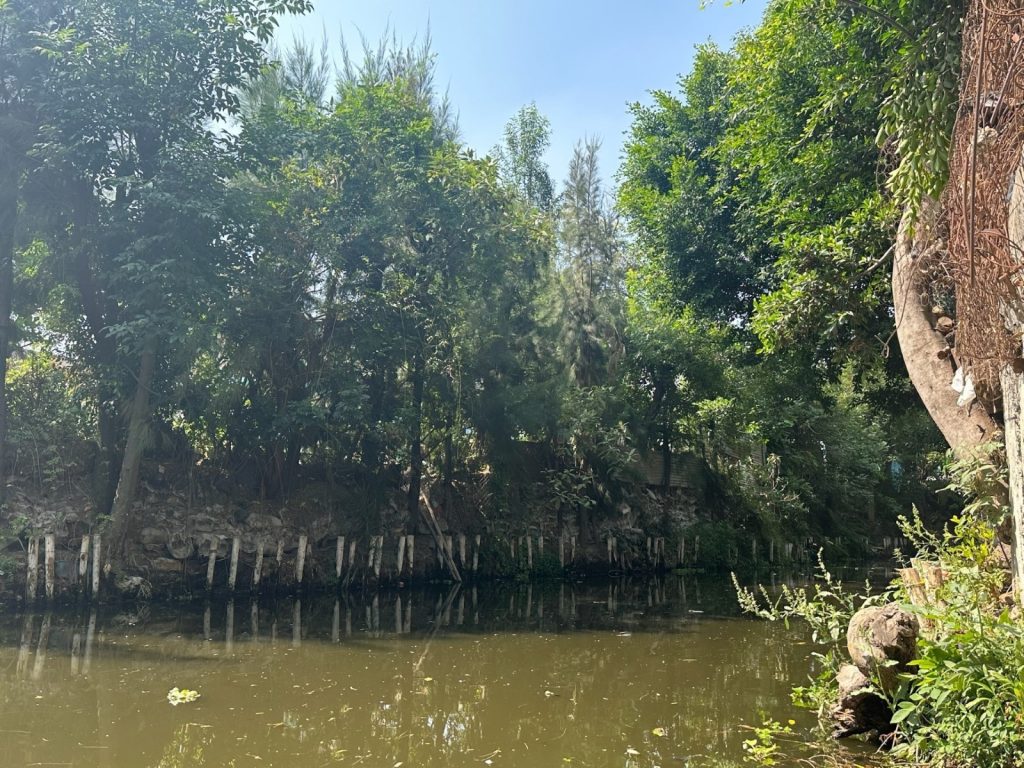
Some of the problems that Marco Polo Tellez Orozco (president of Olintalli) and Sara Sandoval mentioned were that many of the chinampas are being abandoned by the chinamperos in favor of moving to Mexico City or migrating to the US for a better life. This has led to illegal land selling, since proving ownership of the chinampas is next to impossible unless it has been passed down from prior generations of chinamperos. Also, many illegal structures are being built on the chinampas for families in need of shelter or for companies that want to capitalize on the tourism within the canals of the chinampas. The main problems that the chinampas in Xochimilco face is the lack of and quality of water. At one point in the 1900’s, the Mexican government permitted the release of sewage into the canals in an attempt to maintain the water levels. Sara told me that there are also dams built in order to keep the water level high in the touristy spots, which leads other canals and chinampas to suffer with a lack of water. Without a sufficient water level, the roots of the ahuejote trees that border the chinampas are exposed, which leads to strain on the plant and an inevitable death. The image below shows how much the water levels have decreased in this area, with the top of the underwater fence showing.

Decreased water levels with underwater fence exposed

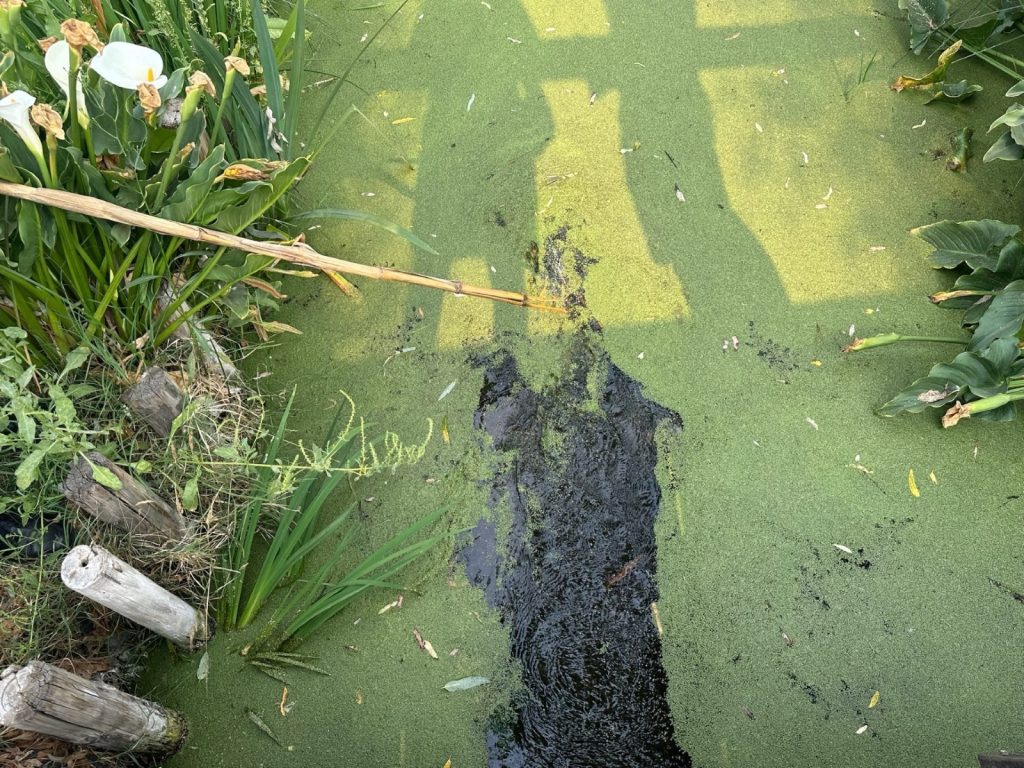
To combat these issues, both Marco and Sara are involved in going back to the traditional farming methods that were employed by the indigenous people of Xochimilco. The traditional mud nurseries with the straw ground cover in order to retain the moisture in the ground. They are growing different varieties of lettuce, kale, corn, garlic, beets, peppermint, sunflower, and other types of vegetables and flowers. All of the excess organic matter is put into a compost heap where it is then used for the next succession of plants. In the ChinampasXochimilco chinampas, some of the organic matter was put into a black plastic bag, where the gas from the decaying matter was used to cook food using gas pipes and valves. There were also water filtration holes that used a plastic sheet with water lilies as the biofiltering plant and the clean water would be used for irrigation as opposed to directly from the main canals, since the water quality is poor. Both the Olintalli and ChinampasXochimilco chinampas had biofilters installed from UNAM, which is the largest public university in Mexico. The little canal that had the biofilters had clear water, as shown in this image below. 

Clean chinampa canal water from biofilters

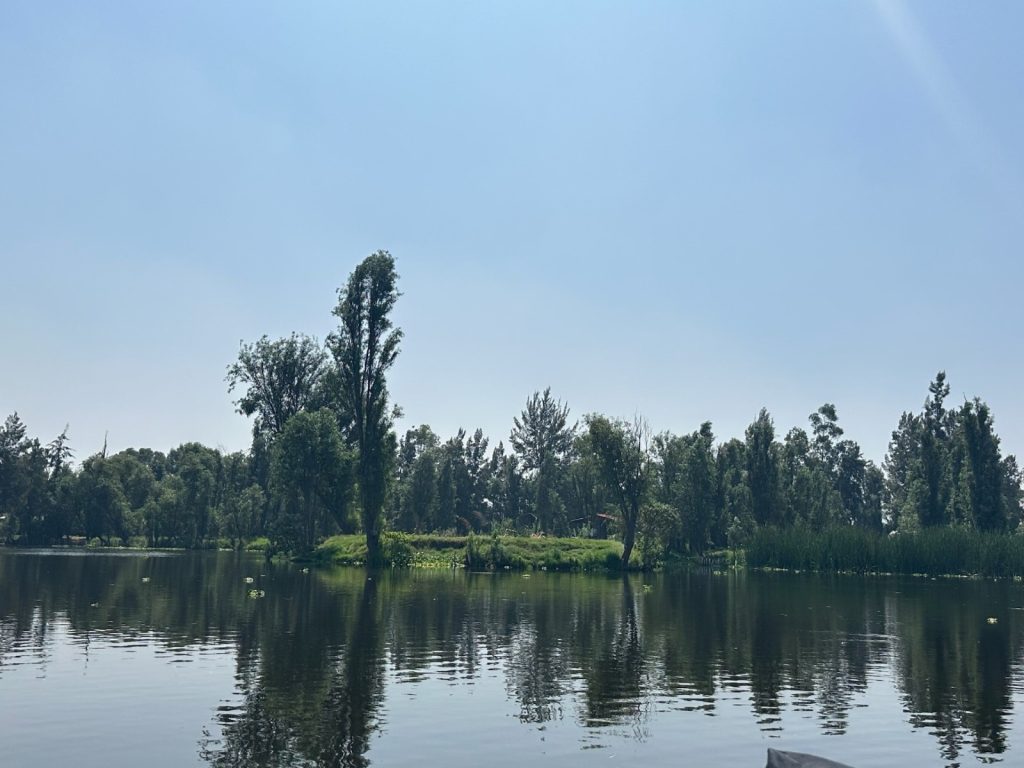
Going to the chinampas in person was amazing, with the beautiful views, flowers, and colorful boats. The chinampas themselves were beautiful and had weeds and flowers interwoven throughout the land. The organizations created sustainable structures for living and cooking which shows how well they can adapt to the ever increasing urbanization of Mexico City. As long as there are people who care about the chinampas and the value they hold culturally and agriculturally, the chinampas can slowly make a comeback from the disturbed water table and pollution from Mexico City and regain some semblance of its former glory. 

Beautiful chinampa scenery

Indigenous Languages and Cultures in Mexico

By Gabriela Perez

My parents are disconnected from their indigenous roots, but the trips to my parents’ childhood homes and seeing my grandparents’ and great grandparents’ portraits make our indigenous roots undeniable. I find it greatly important to preserve pre-Hispanic ancestry, especially because I am so disconnected. That is why when I saw that LAC was going to Mexico City (CDMX) for personal investigations, I leaped at the opportunity. 

Mexico City is the largest city in North America, so I knew it would be a hub of resources and information that could kickstart my investigations. Although CDMX is not the region with the largest Mexican indigenous population presence (which would be Oaxaca and Yucatán), there is an astonishing presence of indigenous cultures in and around the city. There are 55 indigenous languages spoken in the city alone. 

When comparing the prevalence of indigenous culture in Mexico to the United States, I sat in awe at the difference in the preservation of languages, with 68 live indigenous Mexican language groups which consist of over 300 distinct linguistic variants. This is especially critical when considering how vital language is to culture. I felt an immense need to understand the reasons behind this wonderful preservation of languages and what makes Mexico stand out in such a unique manner. I was particularly interested in understanding the role of institutions with the preservation and attitudes from indigenous and non indigenous individuals towards indigenous cultures. 

I spoke with a professor who works in the indigenous education department at the National Pedagogical University (UPN) in CDMX to gather more insight on what space indigeneity holds in Mexico. UPN is a university that dedicates itself to teaching others how to teach. The indigenous education department, in particular, works towards creating a space/context where others feel compelled to speak the language. She explained to me that this program is not linguistically focused but rather keen on getting the indigenous languages “out there” because the prevalence of the languages is in a state of emergency. More work has been done to maintain tangible indigenous cultural manifestations such as embroidery than intangible manifestations such as language because it can be commercialized. So, more work still has to be done to preserve indigenous intangible culture and to gain more support from institutions such as the university and government. I will continue talking to individuals from other institutions such as the United Nations Educational, Scientific and Cultural Organization (UNESCO) and National Institute of Indigenous Peoples (INPI) to gather a fuller idea of the situation of indigenous cultural preservation efforts in and around Mexico City.   

Learning about the place indigenous presence holds in a pluricultural country like Mexico has taught me how important it is to maintain a sense of self regardless of the more dominant society it may preside in. It also highlights the importance of making space for one’s culture.   

Exploring Mexico’s Diversity Through the Lens of the Maya Train

By Miguel Villanucci

Understanding the complexities of Mexico’s population trends, cultural richness,  community behaviors, and ultimately the answer to my research would undoubtedly take a lifetime. However, a week was enough for me to realize that the key to all these aspects lies in Mexico’s diversity. My research focuses on the effects of the Maya Train on the upcoming presidential elections in Mexico, a project that has sparked varied opinions due to its prominence in the current presidency’s agenda. The Maya Train aims to build a railway in southeastern Mexico to connect cities and boost tourism, creating job opportunities in underdeveloped regions. However, opponents argue it will lead to more underdevelopment through deforestation and exacerbate income inequalities. Engaging in this research has been challenging from the beginning until the end, but in my opinion, it was more than worth it, as having the opportunity to communicate with many professionals and academic people regarding my topic was a life-changing experience that I will cherish forever. 

The challenge of this study started at the moment of choosing the topic, especially because this was a very controversial one, and many people did not want to be mentioned in this paper. We are talking about NGOs that promote sustainability in the region, important professors who went against the train in the past, and politicians as well. Many of them warned me about the dangers of getting involved in this topic two weeks before the next presidential and congress elections, which made me hesitate about the feasibility of doing this research. Nonetheless, I believed the best way to understand a culture was through their opinions on impactful and controversial projects, so I took the challenge of finding people willing to share their opinions. Some explained that speaking against the project had previously jeopardized their NGOs’ opportunities, while others noted a significant decrease in available information about the project, making them more willing to participate. I am profoundly grateful to those who trusted me with their information anonymously, warned me of the risks, and those professionals who shared their opinions regardless of potential consequences for the sake of education. 

It is important to mention that my research does not critique the Maya train project. Instead, it aims to understand the perspectives of Mexico’s population. That is why my interviews focused on people who represented the opposition to the project, as I wanted to find which part of the population represented the opposition. Before coming to Mexico I thought that we could generalize the opinions of the different states, cities, and regions to some extent. However, Mexico’s diversity and critical thinking mean everyone has unique perspectives. For example, policymakers cannot generalize policies as benefiting “indigenous communities” or “the poor population” because these groups have numerous subdivisions. This realization shifted my research to ensure we capture opinions within each subdivision accurately, avoiding biased generalizations about who supports or opposes the project. This also motivated me to seek out supporters of the project to avoid generalization. 

Determining who supports what remains an ongoing investigation, aiming to discern whether people prioritize sustainability or development, the primary arguments for and against the project. In my opinion, everyone has valid points, but what does the majority think? This research has been a continuous learning experience. Above all, Mexico has instilled in me a profound sense of critical thinking and taught me the importance of not generalizing community opinions based on preconceived notions or news reports. 

Transforming Public Health: Empowering Indigenous Communities Through Healing

By Nery Calmo

Wandering through the bustling streets of Mexico City, I had no idea this trip would redefine my career path and open doors I never thought possible. During my time in CDMX, I embarked on a project examining the Mexican healthcare system, focusing on Indigenous communities and the impact of COVID-19. This project opened my eyes and showed me the importance of viewing the healthcare system from a perspective beyond the US lens. For example, while the US struggles with a physician and nurse shortage due to factors like debt and work-life balance, Mexico’s issue is not a lack of doctors but rather the need for better distribution across the country. This problem was exacerbated during the pandemic, highlighting the need for more efficient resource allocation and strategic planning to ensure that all regions, particularly rural and Indigenous areas, receive adequate medical care.

This project allowed me to dive deeper into a field of research I wasn’t previously aware of, exposing me to community health and the public health sector—areas often overlooked in the BSBME curriculum. By talking to doctors at the Cruz Roja Mexicana and leaders in Mexico’s public health field, I explored complexities and nuances I hadn’t known existed. I learned how policies and institutions have guided the country through the global pandemic, broadening my understanding and appreciation of this crucial field. For instance, I discovered how community health workers play a vital role in bridging the gap between modern healthcare systems and traditional practices, ensuring that culturally relevant care is provided to all populations in the country.

One of my main reasons why I wanted to explore this topic in particular is because of my background being Maya Mam and Guatemalan. After the genocide in GUA, many of my family members moved to Mexico to escape, leading to a significant portion of my family settling in the Yucatán. Due to Mexico’s proximity to Guatemala, I was eager to understand the healthcare systems and health policies in the country and how they impacted Indigenous communities like mine. Exploring Mexico’s response to the pandemic and learning more about institutions in place to help these communities such as INPI (Institución Nacional de Pueblos Indígenas), gave me a new avenue to explore and learn about. These institutions are crucial in advocating for Indigenous rights and ensuring that policies put in place are inclusive and supportive. 

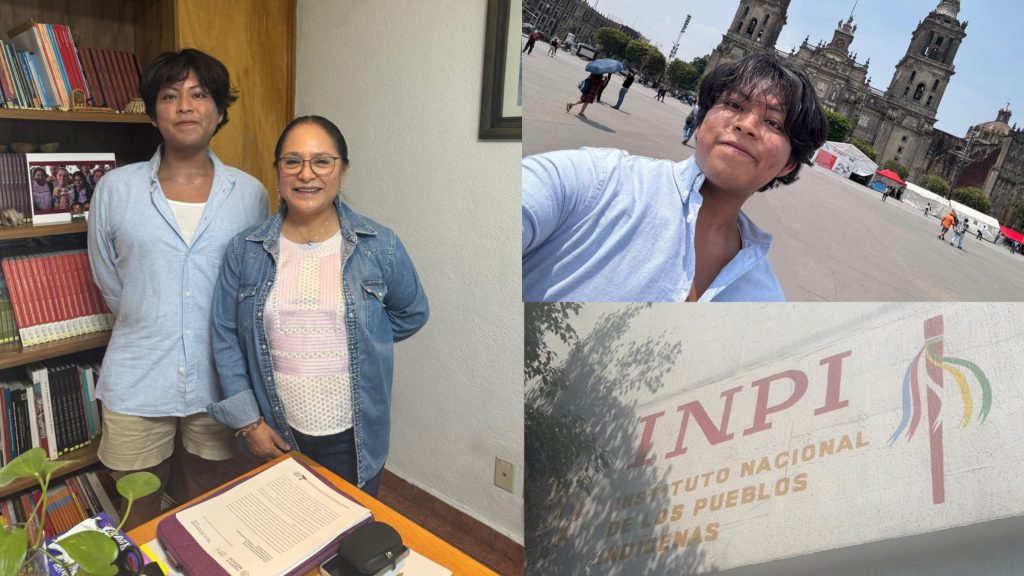
My interview with Dra. Bertha Dimas Huacuz at INPI was particularly inspiring as she aims to incorporate traditional medicines into medical education in Mexico to provide equitable healthcare for Indigenous communities, ensuring that their cultural practices are respected and integrated into modern healthcare. I was struck by the collaborative efforts of various organizations and government bodies in Mexico working towards a more inclusive healthcare system such as her initiative to train healthcare professionals in culturally competent care and the integration of traditional healing practices into public health strategies to address the needs of Indigenous populations and reinforce the importance of culturally sensitive healthcare. This conversation really resonated with me and revitalized my desire to hopefully one day attend medical school because it’s people like Dra. Dimas Huacuz who are not afraid to spark change that are worth looking up to; and gave me hope to one day do the same and give back to my community and finally heal from the traumas of the past.