As I was scrolling through some news articles about museums on my phone, I came across an interesting article about how the Musée Rodin in Paris is using revenue from the sale of bronze casts of Auguste Rodin’s sculptures in order to decrease their budget …
This week, I am very excited to be introducing another segment to our blog called My Home is a Museum, created by fellow Tufts master’s student Sayyara Huseynli. In preparation of its introduction to the Museum Studies Blog, Huseynli agreed to be interviewed in order …
As people across the country fight back against police brutality and systemic racism, cultural institutions need to leverage their platform as trusted sources of information to educate the public about racism in the United States. Discussions about race are typically limited to art and history museums, while science museums tend to focus on the environment, health, and conservation. Science museums are not exempt, however, as racism intersects with both environmental science and health science. Moving forward, it’s critical that science museums start addressing systemic racism in order to better serve both their missions and their communities.
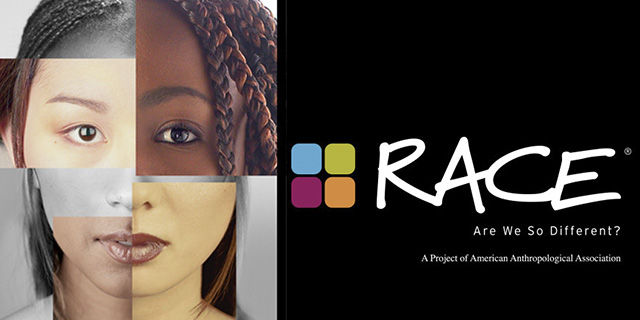
RACE: Are We So Different? debuted in 2007 and has visited over 40 institutions.
The American Anthropological Association and the Science Museum of Minnesota worked together to develop an exhibit entitled RACE: Are We So Different? in 2007 to explore race and racism in the United States. The exhibit combines history, science, and lived experiences to challenge how we think about race. The exhibit has since travelled around the country to various science museums, with its most recent stop at the Durham Museum in Omaha, NE. A traveling exhibit that addresses race is great, but science museums have a responsibility to do more.
Many science museums focus on topics about the environment and sustainability, but from my experience, rarely talk about environmental racism. Environmental racism is the disproportionate impact of environmental hazards on people of color. For example, Black and Latinx Americans are more likely to live in areas with high air pollution leading to an array of health problems. Overall, people of color are on the front lines of the climate crisis and have fewer resources to deal with the consequences. In the U.S., the white upper middle class will be the last to feel the catastrophic effects of climate change. These are the same demographics that tend to visit museums. To both better serve communities of color and accurately deliver conservation messaging, science museums have a duty to address environmental racism head on through educational programming and activism.
Ending our reliance on fossil fuels is the key to reversing climate change and a fundamental part of environmental messaging. Non-renewable energy is also tightly linked with colonialism and the destruction of indigenous land and culture. In 2016, the Dakota Access Pipeline was rerouted to pass directly upstream from the Standing Rock Sioux Reservation without understanding the environmental impacts. Only this year did the D.C. district court order a proper environmental review. The Standing Rock Sioux Tribe is still fighting to shut down the DAPL. To divorce climate change and sustainability from human rights is a disservice to the indigenous communities that have led the environmental movement from the beginning.
From earthjustice.org
Health sciences and medicine also have a deeply racist history. Ethics and consent have evolved over time, but have taken advantage of people of color in particular. Jon Quier experimented with smallpox inoculation on enslaved peoples in Jamaica. The Tuskegee Study of Untreated Syphilis in the Negro Male deliberately misled black men into believing they were receiving treatment in order to study the progression of the disease. In 1951, Henrietta Lacks’ immortal cancer cells were taken without her or her family’s knowledge or consent. These HeLa Cells have been instrumental in understanding polio, HIV, HPV, and thousands of other diseases, but have sparked questions about informed consent and collecting patient cells. Museums are uniquely equipped to present these questions and facilitate discussions on bioethical standards. It’s important to acknowledge and confront how racism has and continues to shape medical advancements worldwide.
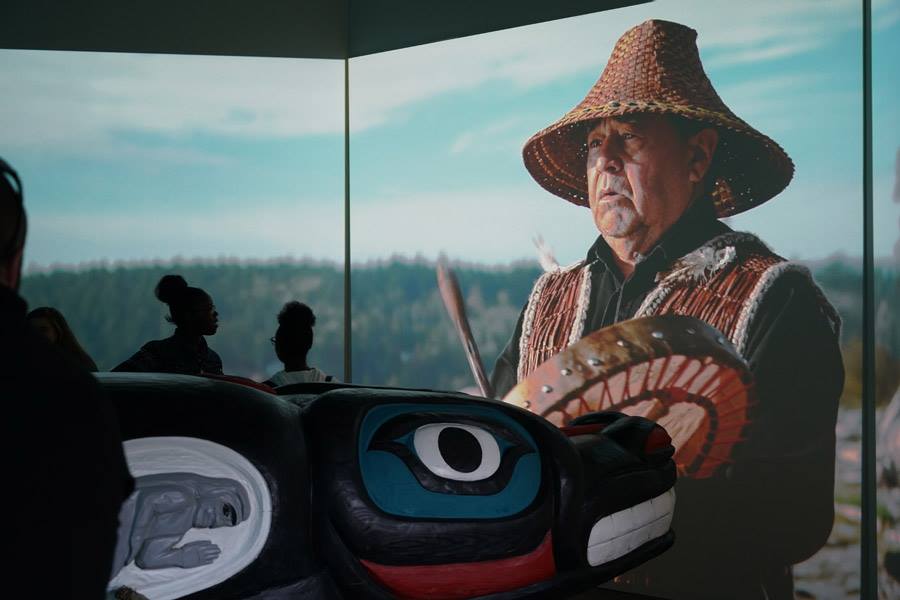
Whale People: Protectors of the Sea at the Florida Museum of Natural History.
As educational institutions, most science museums are already addressing both the current environmental crisis and human health. As cultural institutions, they need to include whole narratives if they are going to properly serve their communities. The Natural History Museum is a traveling pop-up museum that “makes a point to include and highlight the socio-political forces that shape nature.” Past exhibits include Whale People: Protectors of the Sea which addresses orca conservation, pollution, and industrialization of the Pacific Northwest in collaboration with the Lummi Nation. Mining the HMNStackles the Houston Museum of Natural Sciences’ relationships with the fossil fuel industry by investigating exhibits in HMNS and highlighting the stories of communities along the Houston Ship Canal.
All science museums need to take The Natural History Museum’s lead and project marginalized voices. To remain apolitical is to continue whitewashing both environmental and health sciences and to silence BIPOC communities. Science museums need to uplift activists of color by giving them a platform to speak. Science museums need to diversify their boards, staff, and leadership to dismantle the white narratives that are pervasive throughout. And science museums need to adapt their missions to address the social and political factors that influence both nature, health, and scientific discovery.
The recent decisions to remove various statues and monuments across the nation presents, I believe, an opportunity for museums to play a vital part in this reevaluation of our nation’s history and to serve their communities in a vital way. While public opinion calls for …
Having grown up going to museums, it would surprise me when others would not enjoy going to museums as much as I did. Many times, I would attribute such disinterest to boredom, thinking that they just never learned how to have fun in a museum. …
Museums across the country have felt the impact of the COVID-19 and the mandatory stay-at-home orders. Thousands of employees have been laid off and furloughed as these institutions try to stay afloat without revenue from visitors. Zoos and aquariums have an extra element to juggle: live animals. Without reliable income to buy food or pay staff, zoos and aquariums are having to find new ways to cope.
Tierpark Neumünster in Germany has expressed panic at its dwindling budget. With no money coming in, the zoo announced that it may have to start sacrificing certain animals to feed the others. The park’s beloved polar bear, Vitus, would be the last animal standing. While Tierpark Neumünster is only suggesting this as an absolute last resort, it does shine light on some scary scenarios. What would happen if zoos and aquariums run out of money? What if they shut down? What would happen to the animals? These institutions are in uncharted territory. There’s no protocol for handling a pandemic and months of closure.
Vitus, the polar bear
The animals themselves have been feeling the impact of the pandemic. COVID-19 is a zoonotic disease, meaning it jumped from animals to humans. Snakes, pangolins, and bats are all feasible culprits. Furthermore, we do not know which animals in our zoos could potentially carry the disease or succumb to infection. Tigers and lions at the Bronx Zoo have tested positive for COVID-19, likely infected by an asymptomatic zookeeper. Thankfully, all of the cats are doing well and recovering, but there’s little knowledge on how other species will react. Ultimately, COVID-19 is an unknown entity. We know it can infect animals, we know it can pass between humans and animals, but we do not know the full ramifications.
Nadia, one of the Bronx Zoo’s tigers who tested positive for COVID-19.
Massachusetts started its four phase reopening on May 18th. As of May 25th, outdoor zoos are allowed to reopen, with strict guidelines. Aquariums and other museums will not be allowed to open until Phase 3. With such limited information about the interspecies spread of COVID-19, it’s risky to allow visitors back into proximity with these animals. Reopening could put both the visitors and the animals at an increased risk of infection.
It’s a tricky balance to find enough money to operate while prioritizing the health of the animals, the visitors, and the staff. In the U.S., museums received aid from the $2 trillion distributed from the CARES Act on March 27th, designed to protect American workers and small businesses. For animal care, zoos and aquariums need more. The Association of Zoos and Aquariums has collaborated with the American Alliance of Museums to request an additional $4 billion in relief funding from Congress. Here is the AZA’s form to request aid for zoos and aquariums. Hopefully, with additional funding, zoos and aquariums won’t have to choose between reopening prematurely or feeding their animals to each other.