
Together with colleagues from Uniformed Services University (USU) and Tufts Medical Center (TMC), Dr Herman is partnering with Drs. Thomas Darling (USU) we will be presenting preliminary findings at the upcoming 2024 Military Health System Research Symposium in Florida this coming August. Ongoing studies will not only deliver therapies for healing wounds, but also to promote skin grafting.
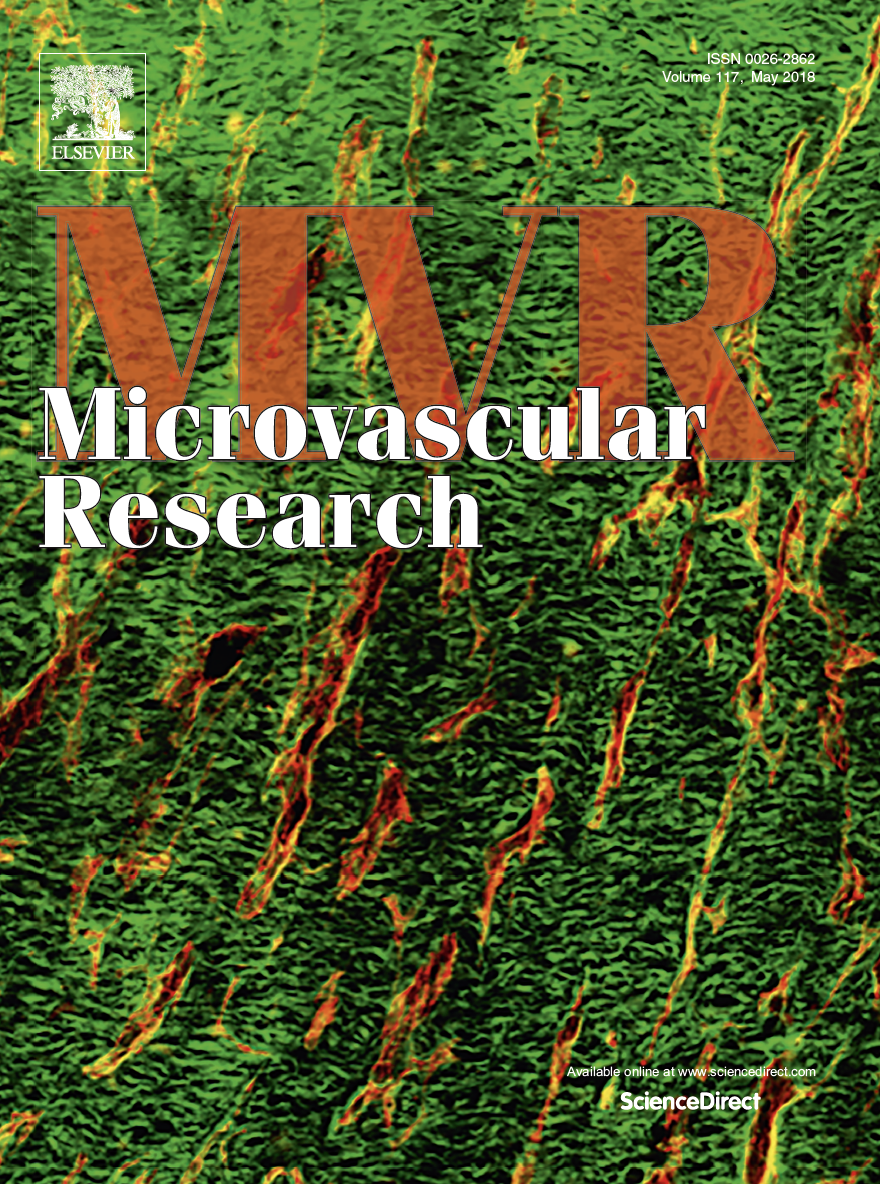
We are so excited to let everyone know that our previously published work will be highlighted every month as the cover photo for Microvascular Research, Elsevier Publishing Co. Please join with me in congratulating everyone on the team and especially Tony Sheets for his instrumental contributions to this and related ongoing studies, here, at Tufts University’s School of Medicine.
Sheets AR, Massey CJ, Cronk SM, Iafrati MD, Herman IM. J Transl Med. 2016 Jul 2;14(1):197. doi: 10.1186/s12967-016-0946-1.
- PMID: 27369317 Free PMC Article
Professor Herman set to chair the 16th Annual WoundHSI Conference in New York City, June 28-30, 2018
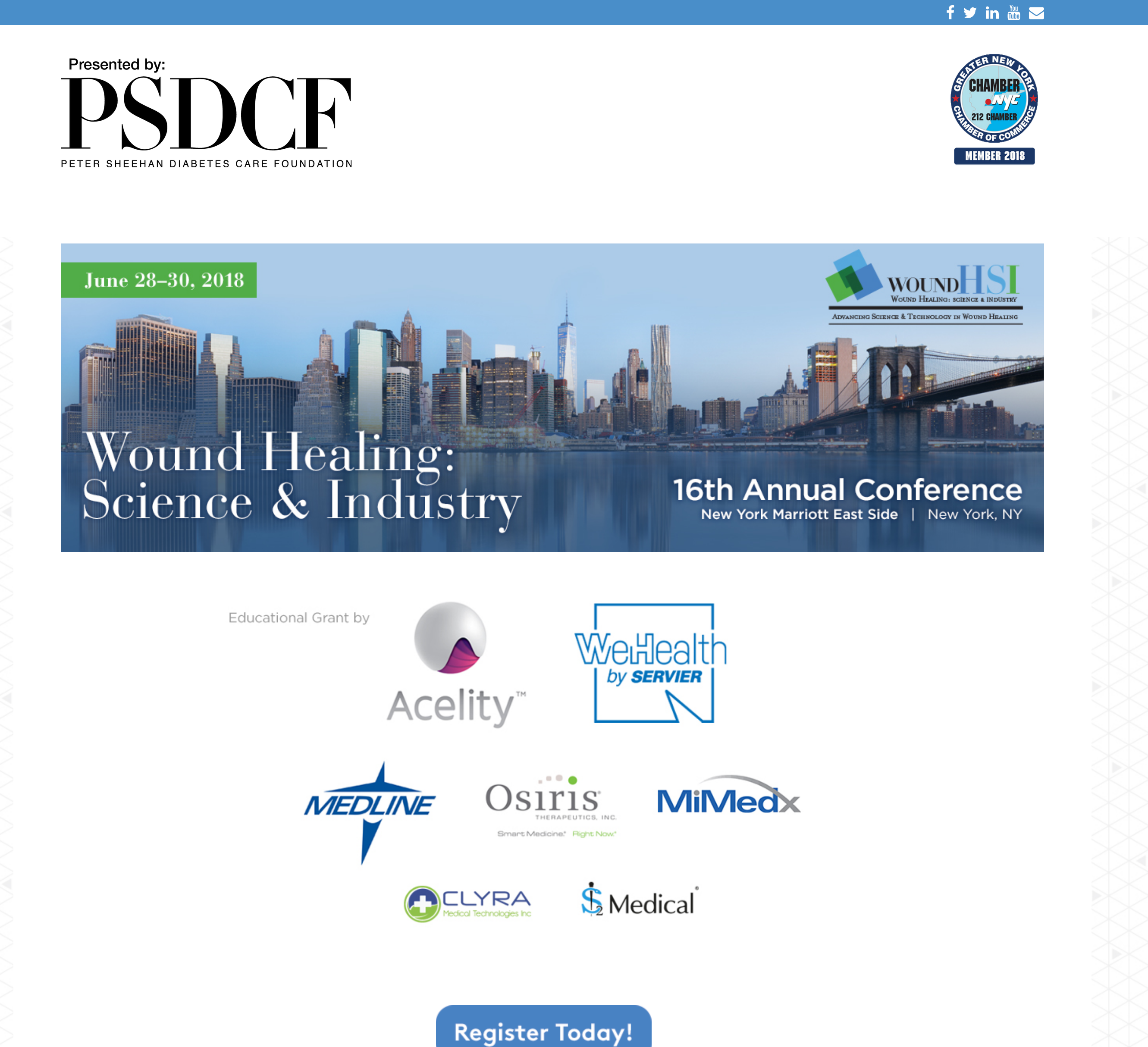
Join with Professor Herman and key leaders in discovery and clinical innovation at Wound HSI. It’s not too late to register or consider competing for the Peter Sheehan Young Innovator Award. Please visit WoundHSI.org for registration or other conference information. See you in New York City in a few days!
At the recent annual meeting for the Wound Healing Society and the Symposium for Advances in Wound Care, professor Herman joined together with colleagues to lead a symposium on ‘Reducing the Burden of Stalled Wounds: Progressing Towarsd Healing’. The symposium, which featured talks by other global leaders across the continuum of healing and wound care (Dr. Lee Ruotsi and Dr. Jeff Lehrman), offered insights about treatment modalities while delivering pespectives on what the next generation of wound healing therapies and smart devices might be for all those in need of healing.
Investigators at Tufts Center for Innovations in Wound Healing have recently reported that two bioactive peptides invented markedly promote wound healing in diabetic swine. The study carried out by a team of physicians and scientists at Tufts University’s School of Medicine and Tufts Medical Center demonstrate that the wound healing peptides convert non-healing wounds into those capable of closure by activating wound healing angiogenesis, promoting epidermal cell migration and growth while ‘re-balancing’ the wound bed’s protease and protease inhibitor profiles. The work, which recently published in the Journal of Translational Medicine (JTM) follows earlier work demonstrating safety and efficacy in cell-based assays and in murine models of impaired healing. A link to the JTM publication can be found here: Sheets et al, 2016
Recently, at Experimental Biology 2015 being held in Boston, MA. Jennifer Durham received honors for ‘Pericyte contractility controls endothelial cell cycle progression and sprouting: Insights into angiogenic switch mechanics’, which we published late last year. The work, which teaches how pericyte chemo-mechanics controls endothelial growth dynamics and angiogenic switching, not only represents a major padadigm-shift in our understanding the regulatory role that pericytes play in orchestrating microvascular morphogenesis; but, the work will enable our creating ‘next generation’ cellular therapies capable of modulating pathological or physiological angiogenesis. Congratulations to my outstanding colleagues: Jennifer Durham, Howard Surks, Brian Dulmovits. This is truly a great achievement, demonstrating the global attention our work is receiving while offering considerable new hope for all those in need of healing.
Professor Herman recently delivered a Henry Stewart Talk (HST) on dynamic reciprocity and wound healing. A link to the HST can be found here: http://hstalks.com/?t=BL1863792-Herman
Recent work ongoing in the Center for Innovations in Wound Healing Research now indicates that microvascular pericytes can ‘instruct’ capillary-derived endothelial cells, ‘switching’ the endothelium from a growth-arrested into a growth-promoted state. With this shift, there is a marked increase in angiogenic potential when specific features of the pericyte are altered via genetic and molecular means. With this manipulation, pericytes are mechanically altered in that the cells become more contractile and better able to activate angiogenesis in response to injury. These exciting findings have recently published in the American J Physiology-Cell Physiology.
Recently, Ira Herman was interviewed about the therapeutic potential of the wound healing peptides created at Tufts University’s Center for Innovations in Wound Healing Research. Here is the YouTube link to the interview with Professor Herman http://www.youtube.com/watch?v=KeLLxSfL5Q0
In a recent study, work ongoing in TIWR in collaboration with colleagues at the University of Virginia indicates that a vascular progenitor cell population derived from adipose is capable of protecting the retinal capillaries against the damaging effects of elevated oxygen. These pre-clinical findings lend strong support for the notion that pericyte-like cells derived from adipose may offer an innovative cell-based therapy for patients suffering with diabetic retinopathy or age-related macular degeneration.
The work was recently published in PLoS ONE http://www.plosone.org/article/info%3Adoi%2F10.1371%2Fjournal.pone.0065691