First Impressions, Lasting Impressions

By: Seri Larson

When visiting a place for the first time, especially in a foreign country, it’s hard to not have an idea of what it will be like and to not form expectations before arriving. This was the case for me arriving in Havana, Cuba with five other Tufts students after a long travel day. Even with the preliminary research done through readings, watching documentaries, and listening to both podcasts and Cuban music, my expectations for what awaited me in Cuba were very different than the realities of what I then experienced in the following week.

If you were to ask me after our first day of being in Cuba what the two things I noticed most was, I probably would’ve had two answers: the first, that Che Guevara was more celebrated within Havana than Fidel Castro purely based on art around the streets; and the second, that the dogs and cats roaming around the city streets unattended reminded me of my own Native American reservation located in the state of Montana back home in the US. One of these things is obviously a more astute and relevant observation in terms of what’s important when thinking about Cuba as a nation and the people living in it. I was initially surprised that Che Guevara was more celebrated through the art around the city seen in murals, paintings, drawings, etc. than Fidel Castro was based on the historical background I’d gleaned from our prior research. That being said, after a couple of days there, I connected the dots and understood that in Cuba during the time that we were there for, Che Guevara represented more of what the Cuban people were aligned with today in 2023 while Castro was still an influential leader, but more of a symbol of a revolution past. And circling back to the streets of Cuba amidst the art of past leaders, the dogs and cats were also a part of the Cuban culture that one might not have expected and an aspect of Cuban life that might go unnoticed or at least, unmentioned in discussing Havana as it might seem unimportant compared to the lives of Cubans and the context that they live in. While this might be mostly true, the way these animals on the streets were treated did remind me of my reservation back home. The dogs and cats blended into the normal hustle and bustle of the streets of Havana by the end that I barely noticed them anymore – they were as a part of the community as the buildings families lived in, and some could be seen watching the street life from a doorway at their owner’s feet.

With those being my very first impressions of my first 12-24 hours of being in Cuba, what follows are two, very succinctly put, lasting impressions from Cuba that have stuck with me since being back in the US.

First, most, if not all, of the Cuban people we spoke to were extremely welcoming and kind. Having lived in and near cities in the US all my life, I had not expected to be as accepted into homes and lives, even if so briefly, as we as a group were in and around Havana. I’d never before had the experience, both in the US and in my travels outside of the US and Cuba, of asking a stranger a question and being able to learn about their life or whatever was on their mind without much prompting.

Second, I was surprised to see the ways in which the dire economic situation in Cuba was affecting the Cuban people firsthand. One of the aspects of Cuban life Carolina and I talked about often was the food and culture around food. What one thinks of as “traditional Cuban” food can now almost exclusively be found in restaurants for prices catering to tourists and no longer in the homes of Cuban people. What the people are actually eating in Cuba is based on what they’re able to afford and the meager amount provided, somewhat inconsistently, by the ration system there. Since this trip to Cuba was so fast-paced, I hope that our research project will capture everything I wished I could write in this blog post, but did not have the time or words for.

Blog from Cuba

By: MK Canady

One of the more profound moments that I had during my stay in Cuba occurred on the third night. Our group had bonded with one family in particular after meeting the father in a serendipitous manner the day before. The man, Jorge Luis, had then invited us back to his home to conduct an interview and to meet the other members of his family. Personally, I bonded with his daughter, Lola, right away. Upon meeting Gabby, Ava, and I, she welcomed us into her bedroom, introduced us to her son, and was eager to tell us more about her life and share some of her stories. She was outwardly so charismatic and so kind, which I never would have expected.

Sometimes, especially in the U.S. and especially in college, life moves very quickly and you don’t always have time to connect with a stranger one-on-one. Further, strangers can make some people wary and I know that I’m usually hesitant to respond to men or women I don’t know when I’m walking down the street. Yet, Lola was so open automatically, without any delay. I digress; on the night in question, Lola and her brother (Wilson), along with their friends, offered
to take us dancing. We walked and talked with them for quite some time and I had a fairly long and substantial conversation with Lola herself. We spoke about our respective familial relationships, responsibilities we felt we had, and of course, politics and life in Cuba vs. the States. She had so many questions for me, and was so curious to learn more about my own upbringing, about Tufts, and how race affects my life in America. This was another component I didn’t quite expect; I walked into Havana with an open mind, wanting to learn about the experiences of Cubans, but I didn’t know they would want to know so much about us.

Nonetheless, I was happy to swap stories with Lola, and I felt so comfortable telling her things, which struck me as odd because I 1) was speaking to her in my rudimentary college-level Spanish and 2) because I’m not typically prone to sharing life stories or personal tribulations. That night, I think I learned the most. Lola spoke about her family’s experience during Cuba’s Special Period, she spoke about the birth of her son, the pressure to provide for him and herself, and so much more. I spoke about my experiences as a working-class black woman in America, about my own family unit, economic and social pressures that my family has faced, and also so much more. All in all, the conversation touched me so deeply because it was so exemplary of the common saying: we have more in common than that which divides us. I think there are times in life that I’m prone to being pessimistic or hyper realistic, and the last few months of my life have
been trying ones. I’ve had to work extra hours, I’ve faced personal obstacles, and I lost one of my parents unexpectedly. Thus, I walked into Cuba with an open mind, but a heavy heart. The bond that I formed with Lola, and the light she brought into my life in such a short span of time is something that I’ll remember for the rest of my life. When I think of Cuba, I’ll think of her and her family, of her kindness, her generosity with her space and her time, and my heart will feel lighter.

Juani, the flower man

By: Carolina Hidalgo-McCabe

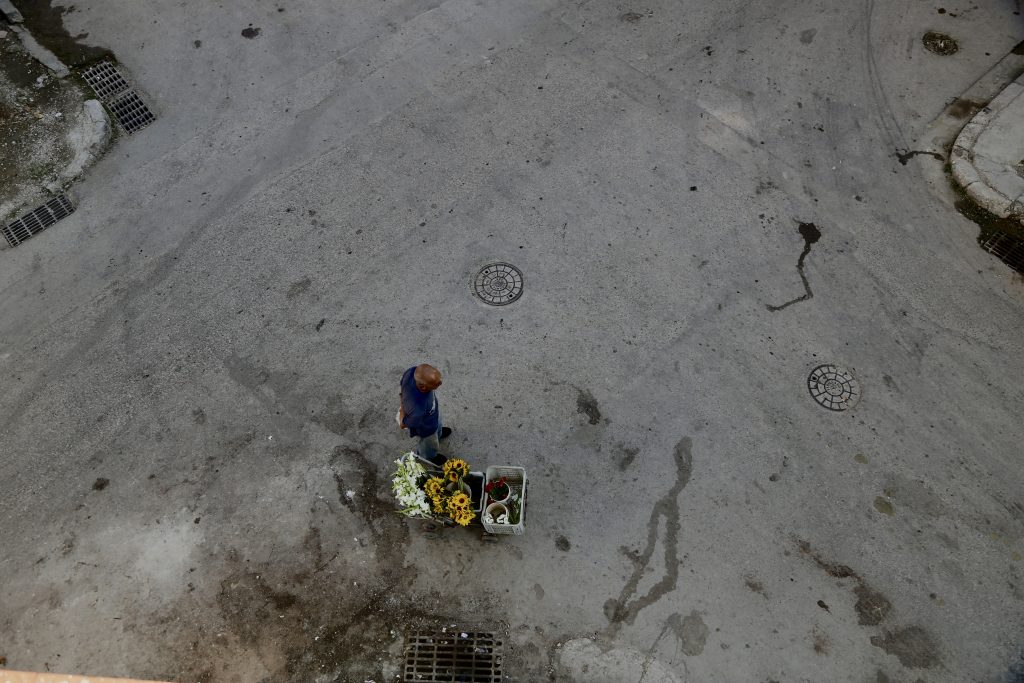
I peered over the side of the balcony, and below me, on the corner, I see an elderly man with a cart of sunflowers and gladiolus. He’s not yelling out to let people know he’s selling flowers, just standing calmly. I quickly descend the stairs to go speak to this man, but as I arrive, he’s no longer there. I almost head back up to the balcony of our Airbnb but decide to take a loop. Sure enough, there he is on the next corner.

“No hay alegria aca” (there’s no joy here) these words flow out of Juani’s lips, as he holds a cart filled with flowers. Juani was born and raised on Campanario street. He’s an elderly Afro-Cuban man wearing a Yankees hat, a red and white striped shirt, and some light-wash jean shorts. His cart of flowers is looking sad this morning and he gifts me one of his white gladioli stems, two flowers blossoming off it.

Short in stature and missing half of his teeth, Juani stood every morning on this corner from 9am to 1pm selling his sunflowers and gladiolus flowers, and the occasional rose. For a man who sells flowers, his vision of Cuba is dark. “No hay Esperanza, la única esperanza es el mar” (There’s no hope, the only hope is the ocean) We both look out to the sea, where thousands of Cubans have risked their lives on rafts to get to the US. “Cuba está vacío” (Cuba is empty).

To Juani, his community is breaking down. No longer are the bars filling up, the clubs have closed, the stores have emptied, and the lines just keep getting longer and longer. Down the street from us, a pharmacy sits on the street corner, and a poster of Che Guevara looms over empty shelves. The ration line for bread grows next to us. One piece of bread a day.

Juani is alone, but surrounded by community. Everyone seems to know him. As we converse on the side of the street corner, countless people, old and young come up to greet him or yell to him from across the street. An icon of the community it seems. He has one brother, who pulls up to us in his motorcycle at one point during our conversation and says hello. His other brother left for New Mexico on a raft in 1994 but was murdered three years ago. A friend of this brother in the US sends him the occasional medicine. It is remittances and money from exile that keep so many Cubans surviving.

Cuba, to Juani, is home, but a home that is crumbling. “Las cosas estan malas, pero bien malas” (things are bad, really bad) Juani states as he shows me his ration card, recounts all the people who have left the neighborhood, and describes the hunger that persists. Juani tells me he used to go in stores for fun, to look at the products. Now, he dreams of the days he could find a medicine he’s prescribed anywhere on the island.

I ask Juani what it’s like to be the flower man, a symbol of so much hope and joy, and to feel so little of it. He laughs and his eyes melt a bit, looking at his cart. He does it to get money without the state involved. The regime has failed him time and again. Failed them all. Juani misses the days when the streets were filled with music and laughter when you’d grab a bottle of rum for a good time, and when the malecón was bustling with people and rhythm. Instead, he sits out at night and watches the few people wander the streets. He stands on the corner, waiting for friends to come chat. Waiting. But as an elderly man, he has few expectations of a different life to live.

For the reality Juani faces, he emanates warmth. The first day he gave me a sip of his Cafecito out of a red plastic cup on his cart, the second day, we went to a window down the street, and he treated me to a coffee. We quickly sipped our slightly bitter cafecitos out of small glass cups and returned them for the woman to serve the next customer.

On each of my nine days in Cuba, I got to spend a short amount of time with Juani, he’d clue me into whether the people were able to get their bread ration for the day or if there was coffee or not. These daily interactions, filled with his honesty and tender compassion fill me with tremendous joy, heaviness, and hope for a world in which the flower man down the street can nourish himself and feel nourished by his country.

Cuba Blog Post

By: Ava Vander Louw

Prior to travelling to Cuba, I didn’t know what to expect—when trying to understand the reality of life on the island through google searches, it was apparent that the truth was obscured by government-owned travel agencies and hotels flashing images of beautiful beaches and retro cars. When I first arrived, through my window, even while blurred by my moving taxi, it became apparent that the photos I had found on google had not captured the reality I was witnessing. By the time I reached the Airbnb, my conception of Cuba that once only consisted of photos of fancy rooftops with luxury bars and salsa dancers was replaced with crumbling buildings and the remains of bankrupt store fronts. As my taxi driver, Carlos, rounded the corner of Companario, I had arrived at the place I would call home for the next 8 days. After putting my luggage away, another student, Gabby, and I walked along the streets near our apartment to familiarize ourselves. We walked down the street until we reached the T-intersection that led to a plaza. Along the water, the unmarked plaza had three fountains—all of which were non-operational and slowly eroding away. Within the basins of the fountains, Gabby and I watched as a group of boys, whose ages likely ranged from 7-17, play fútbol. As someone who grew up loving soccer, I became emotional watching them play with a ball that was visibly deflated and torn on all sides. Yet, as I was thinking about how the ball they played with would be considered trash where I played as a child, all I could hear was laughter and all I could see were smiles—especially when the “referee” would pull out reused pieces of paper to give a yellow card. This scene captured a lot of themes I would see over the next couple of days: even as families struggled to put food on the table and clothes on their backs, Cuban’s kept smiling, and kept laughing. Every morning, I would walk down the street to grab coffee from a man who was selling a shot of espresso for 30 Cuban pesos—equivalent to one dollar and 25 cents—and he would greet me with a warm smile each time. I saw groups of children playing baseball with a bottle cap and a stick, men who propped up their 1950’s Chevy BelAir’s with chipped cement blocks as they repaired their cars with their neighbors. It became clear overtime that the joy I felt around me was because, in a city as big as Havana, it felt like a small town. It was commonplace to see street-level apartments with wide open doors, and people perched up on their balconies, watching as people walk by or chatting with their neighbors below. Down every street, people kept an eye on what was happening. Carolina, another student on this trip, filled me in on something a local had told her. When she had asked a local lady why she never saw any ambulances, the lady responded with ease: “We take care of each other here. In the event of an injurious accident, neighbors, and even strangers, would instantly respond to help by picking you up, placing you in their cars, and driving you to the hospital.” When I heard this story, I was amazed; can you imagine this type of community initiative in the United States? I thought about this repeatedly throughout my time in Havana. On the last night of my trip, I watched from my balcony as my neighbors gathered in front of a door a few houses down to sing Happy Birthday as the clock stuck midnight. Lights turned on around them, and people filed out of their houses onto their streets and balconies to clap. I was so lucky to witness this in my last moments on the island that solidified an appreciation for Cuba that no google search could have shown me: in the absence of the material wants, and at times basic needs, the embracement of community and dedication to each other built a joy that couldn’t be taken away.

All Things Go

by Fatima, Civic Semester participant

Three months could not have gone faster. Each week I called my mom and told her about my adventures, excursions and health, and each week she would say “Another week closer to coming back”. But when I called her just now, instead of her usual response, she asked what time she and my brother should come pick me up from the airport Friday morning. As I began to search my boarding pass for an arrival time, I realized that my time here is done, like it really hit me.

How can a place turn into a home for someone, if they’ve only known it for three months?

It’s because for three months, home was where I could look out the window of my room and ask what’s for lunch or dinner and then proceed to make Buldak ramen with Cassie and Sahana, just to dance to “Dancing Queen” with them. Home was where I could barge into Mathew and Pablo’s room and annoy them because the younger sibling in me wanted to disturb someone’s peace. Home was Charles asking if he could try the food I was eating, cooking or buying and then asking me where it came from, where I bought the ingredients or why I wanted to get it. Home was Yazan falling asleep in the back of Juan Carlos’ car no matter where we went and Jordan asking every single question that came to mind, no matter where we went. Home was Tseringla & Don Pablo constantly telling us to be careful, not to fight with one another and encouraging us to have fun by telling us stories from their lives. Home is Rocafuerte, Ligia, Carlos, Roberto and Nancy, all of whom absolutely carried us on this experience.

But now, how can someone leave this place they call home?

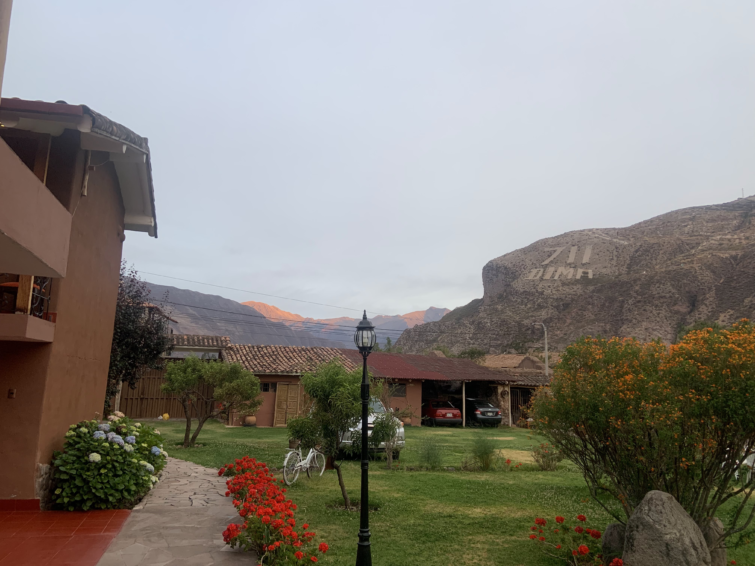
I think it will be something we figure out later, when homesickness hits and we all want to book a flight back to Urubamba. When we all realize that all we want is to be able to go back to the coliseum to play or watch basketball, or see our German friends at el garaje for another good time. Or to come home after Booms and throw a dance party in our kitchen or make really gross smores over a bonfire. I think when we start to remember the things we will miss most about our home, we begin to also understand how to move on and start a new chapter. We will understand the importance of our experience, the impact it has had on us, and begin to accept that while we might want to hold on to this forever, we have to let go. We must take what we can, but also keep it pushing. Because at the end of the day, all things go.

What I’ll miss about Uru:

by Pablo, Civic Semester Participant

I will miss playing basketball with guys and girls my age here three times a week. It’s always a great way to end the day, practice Spanish, and compete with Yazan. Once, I pretended to be Urubambino (changing my last name to Quispe) so they would let me participate in their weekend tournament against other nearby cities.

Everything here is less expensive. We pay for food, moto taxis, clothes, and anything else we may need with soles, which are approximately one fourth the value of a dollar. Also, most festivals and celebrations are free in the plaza, and snacks are usually one sol.

I will miss the sense of purpose I have here. It’s a purpose that focuses on searching: we learn from unexpected experiences, from planned visits to organizations, and from the tops of mountains, where we can see the world, or at least Urubamba, differently.

Traveling with the group is one of the best parts of this whole experience. Juan Carlos, our driver, has a wonderfully contagious laugh that always makes our expeditions more enjoyable, especially when we’re tired, grumpy, and carsick. When we aren’t traveling, we love to go out to restaurants, bars, the plaza, bakeries, clubs…you name it.

I will miss the blasting music and late night dance parties in the kitchen. Jordan has always played salsa, and I’m sure our neighbors can hear Yazan singing in the shower. A recent pastime for us has been storm parties. When there’s lighting, rain, and the power is out, we congregate in the outdoor (but it has a roof) kitchen space to sing, dance, and drink tea.

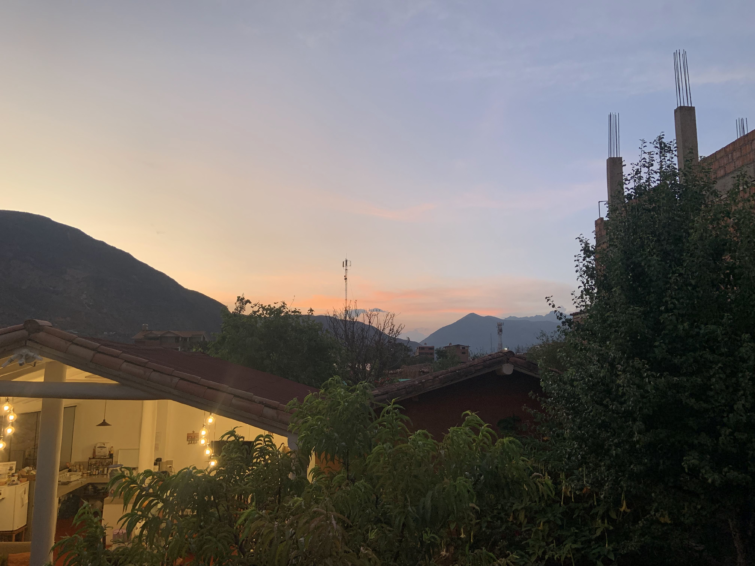
The stars here are amazing. After around 10 pm most of the lights in the nearby area will go out, and one of the best spots in all of Urubamba to stargaze is in our garden (basically our front yard). Now and then I’ll go out there and spend a few hours with Fatima, even sometimes when it’s really cold.

I will miss my roommate. With Mathew, I have learned to share everything that is mine, aside from female dancing partners. Sometimes, we get into arguments that last a few days. Once, I was offered my own room but opted to resolve my issue with him because walking away didn’t seem like the answer. He is very admirable in the way he thinks and observes. We both push each other, talking late at night about difficult things or doing over 200 push-ups because we both are so competitive and later feeling sore because we did too much.

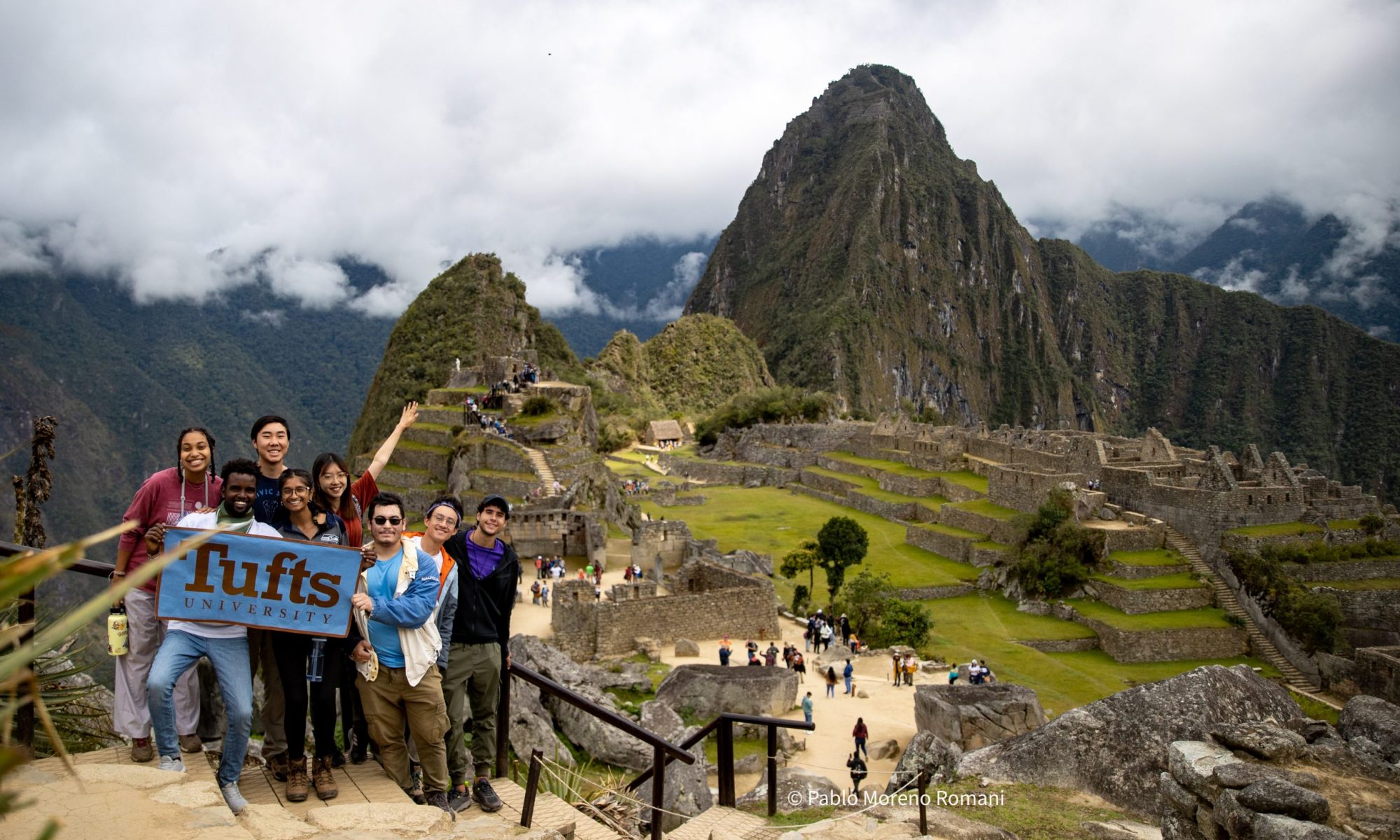
Pablo Moreno is filled with wisdom that he shares with us through his captivating stories and experiences. He also makes us grilled meat for dinner on special occasions, which we usually have by the bonfire. I know he is missing his wife and kids a lot. When he tells us he will miss us after the program ends, I think of Munay, the energy of love.

I will miss Tsering’s singing, thoughtfulness, and kind words. She’s always available, even in the middle of the night, and has adapted very well to the easy-going, spontaneous nature of our group. She also has played a really important role in making sure some of us were able to bond, not just as “buddies,” but through forming legitimate relationships: heart to heart. Huge thanks to both of our instructors for their dedication.

When I came here, I didn’t know how to wash my clothes by hand. Nancy, the person who keeps the house clean, taught me one day as I struggled for well over an hour to wash about five t-shirts and a couple pairs of socks. Nancy and I became good friends, and I often talk to her about culture, daily life, relationships, and aspirations. I will miss her.