Recent Posts

Katharine Hepburn Visits the Frick!

Katharine Hepburn Visits the Frick!

This week I traveled home to Pittsburgh, PA for a few days. While in town, I was able to stop by The Frick Pittsburgh to see the exhibition Katharine Hepburn: Dressed for Stage & Screen. The exhibition included clothing, pictures, posters, and original play bills from Hepburn’s productions and films. The clothing collection came 

Indigenous Peoples’ Day at Boston-area museums

Indigenous Peoples’ Day at Boston-area museums

First, we’d like to start with a land acknowledgement for Tufts University that we are grateful to borrow from an article in the Tufts Daily: Tufts University’s Medford campus is located on Wôpanâak (Wampanoag) and Massachusett traditional territory. Tufts’ Walnut Hill was once one of the 

Boston events for museum professionals this week

Boston events for museum professionals this week

Hello friends and happy Monday! We have details of two events happening this week for museum professionals to share with you. One is happening tomorrow, Tuesday, October 1, and the other on Wednesday, October 2. Both events are FREE but do require advance registration.

Using Visual Thinking Strategies to Jumpstart Audience-Centered Learning

by the Greater Boston Museum Educators Roundtable

About:
Join us for a half-day workshop to consider VTS in a new light! Visitors today suffer from staccato looking: scrolling through Instagram, Facebook, and Snapchat, making instantaneous assumptions about what they see. In order to be responsible citizens in an increasingly global society (with more and more focus on visual culture), visitors of all types need to develop their visual literacy. Doing so increases their ability to assess images and information of all types, including artwork, maps, and primary vs. secondary sources. This level of deep thought and critical thinking informs understanding of our shared human history and fosters a respectful curiosity.

After participating in this workshop, educators will understand Visual Thinking Strategies as a methodology of facilitating conversations about artwork and its broad applications in museum and historic site settings. Participants will learn how to build observation and communication skills in their audiences, how to encourage the consideration of multiple perspectives, how to use images/objects thoughtfully in program planning, and how to improve facilitation skills when teaching. Through small group work and VTS discussions, teachers will walk away prepared to employ an exciting technique that will strengthen audience engagement and foster critical and creative thinking in your museum or historic site.

When:
Tuesday, October 1, 2019
1:00 PM – 5:00 PM EDT

Where:
Otis House Museum
141 Cambridge Street
Boston, MA 02114

Museum Careers Panel Discussion

by the Museum of Fine Arts, Boston

About:
Interested in learning about diverse professions in museums? Hear from a panel of MFA staff members in curatorial, education, exhibitions, conservation, marketing, public relations, and other departments as they discuss working in the museum world. Learn about their career paths, the challenges they encounter in their fields, and the opportunities they envision for the future of museum work. This event is free with Museum admission and open to all undergraduate and graduate students. Students attending institutions participating in the University Membership Program receive free Museum admission.

When:
Wednesday, October 2, 2019
6:00 p.m. – 8:00 p.m. EDT

Where:
Museum of Fine Arts, Boston
Barbara and Theodore Alfond Auditorium (Auditorium G36)
Avenue of the Arts
465 Huntington Avenue
Boston, Massachusetts 02115

Autumnal Museum Day Trip

Autumnal Museum Day Trip

As we say goodbye to the summer and step into fall, I want to plan a Spooky Season day trip for people. The month of Halloween, aka October, is an opportunity to enjoy local and tourist fun by heading to Salem, and more specifically, the 

There’s No Quick Fix to the Gender Inequity in the Art World

There’s No Quick Fix to the Gender Inequity in the Art World

The past few weeks, our blog has focused on what is a museum, and hopefully, you have a few ideas about it yourself now. However, this week I’m shifting my focus to discuss a new survey from ArtNet and the podcast “In Other Words” produced by Art Agency Partners. This survey recently revealed that despite the growing awareness of gender inequity in the art world over the last decade, the top twenty-six museums in the United States acquire artwork from female artists at the basically the same rate that they did ten years ago. So, what can museums do to change this? 

  1. Actually, purchase their pieces – don’t just showcase them. While highlighting works of art through special exhibitions has increased exposure for a lot of female artists, it is not a Band-Aid solution that can be slapped onto the greater inequities in the field. This study specifically looked at the numbers of works of art that were acquired into the permanent collections of these museums. Solo or group female artists exhibitions are helpful in many ways, like name recognition and visitor exposure to the artists’ work, but these shows certainly do not solve the inequities between male and female artists in the field.
  2. Prioritizing female artwork, particularly female artists of color, even when works of art are donations. Museums get some of their pieces through direct purchases, they also often receive them through donations. In this case, donors have a lot of control over because they are the ones purchasing and offering the artwork. If museums truly want to correct the gender inequity in the art world, then they need to prioritize work by female artists in their collection by setting stricter guidelines, or possibly creating a vision statement for the evolution of the collection to guide the acquisitions committee. 
  3. Changing who is on the acquisitions committee. By having new voices and perspectives represented within the actual committee that controls the new additions to the collection, the museum will likely expand the perspectives within its collection as well.  
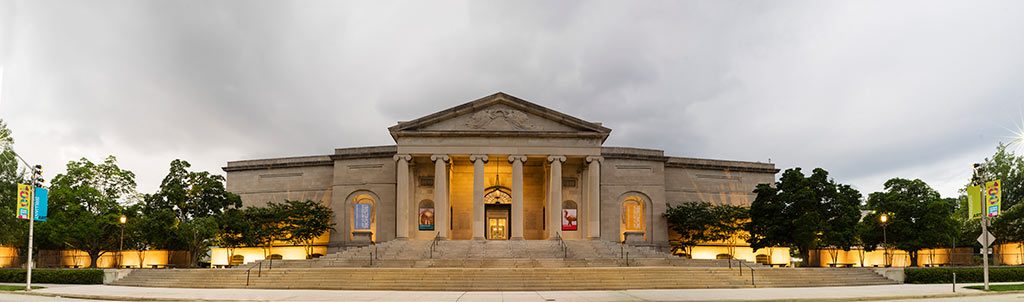
  4. Deaccessioning pieces by white, male artists and using that money to purchase new pieces by female artists or artists of color.  One example of this comes from the Baltimore Museum of Art (pictured below) in 2018: in an attempt to “[diversify] its collection to enhance visitor experience,” the BMA deaccessioned seven pieces of art that it found to be redundant in its collection. With the money from these deaccessioned pieces, the institution set a goal to purchase works from both female artists and artists of color.  
Image from artbma.org

The gender inequity can be improved in the art field, but there may be some backlash or discomfort along the way. Both large and small changes can aid the process, but this new study has made it clear that new mindsets are needed to improve this problem in the decade that’s to come.  

To read more about the survey mentioned here, please see the ArtNet News article: “Museums Claim They’re Paying More Attention to Female Artists. That’s an Illusion” and the New York Times article: “Female Artists Made Little Progress in Museums Since 2008, Survey Finds.”