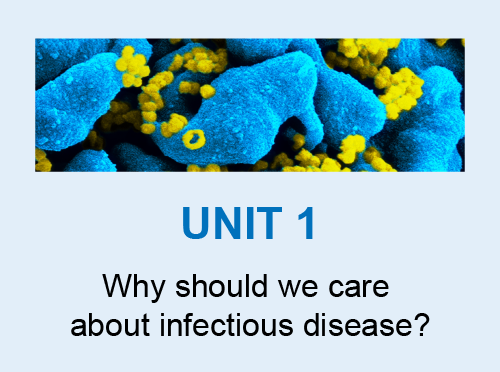
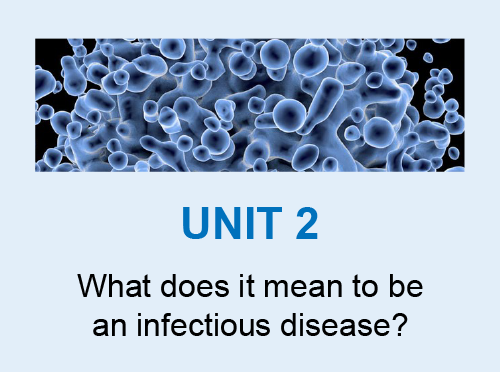
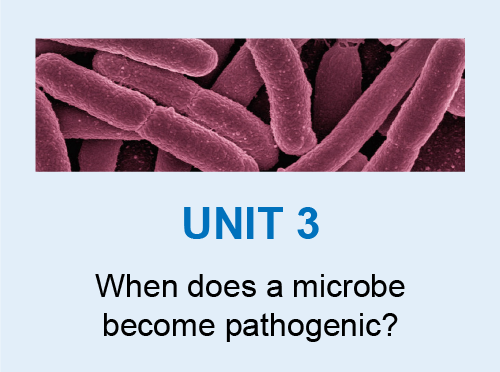
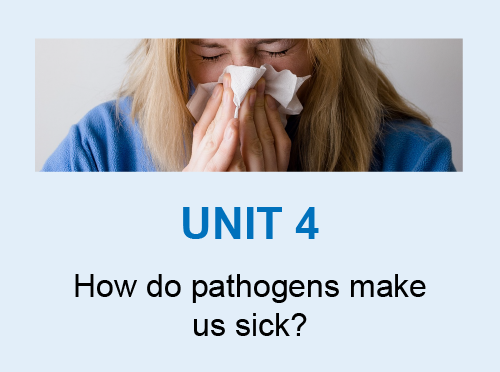
The Infectious Disease (ID) module has been constructed around five key questions that an informed citizen will want answered in order to understand how infectious disease impacts them. The students will address each of these questions and then, for a final project, they will use them to understand an infectious disease of their choice.
|
 |
 |
 |
 |
 |
Virtual Activities
To help support teachers who are using the Great Diseases Curriculum in their virtual classrooms, we have begun to modify some of our favorite activities from the curriculum to be used virtually. It is our hope that these modified activities can be used by teacher with minimum prep work, while still being hands-on and engaging for students. You can find our current list of virtual activities on this page.
Lab: The Tragic Case of Stan
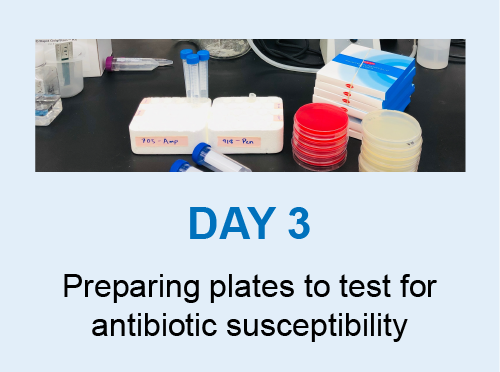
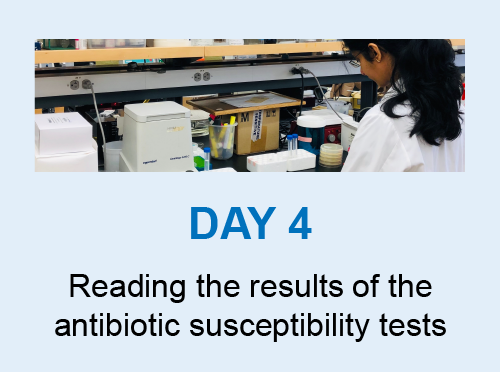
The lab case study is intended to introduce the students to the clinical side of pathogen isolation, treatment and the challenges that may arise in the process. Over a period of six weeks or a few days, the students will be introduced to a fictional character, Stan, who will undergo a surgical procedure and face a complication as a result of a bacterial infection. They will be introduced to and will perform different tests used in the clinical settings. They will also tackle challenges of selecting the treatment options including both standard care as well as novel approaches to treating infections.
We recommend interspersing the lab days in Units 2-5 in a manner that fits you weekly schedule. However it could be run as a continuous project at the end of the module.
|
|
 |
 |
 |
 |
 |
Case Studies
To supplement the Infectious Disease curriculum, we offer case studies to provide students the opportunity to experience how science is practiced. Students are asked to develop scientific questions, design experiments, analyze data, predict results, evaluate data, communicate, and develop models. The Great Diseases case studies are based on actual data obtained from primary research papers. This type of activity provides students with evidence in increments, mimicking the process of research.
|
|
 |
 |
 |
 |
|
|
Epidemics: Ebola
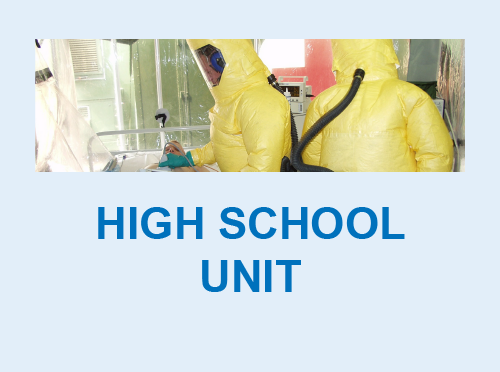
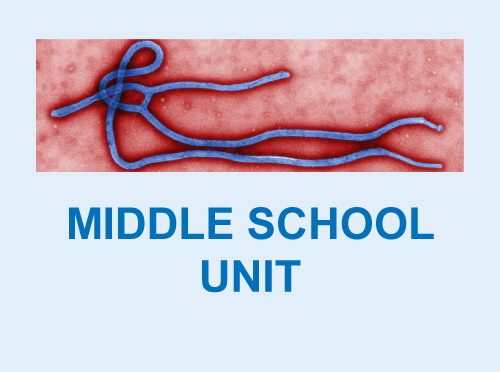
The five lessons of the Epidemics: Ebola unit can be used as a stand alone or as a supplement to the Great Diseases Infectious Disease (ID) curriculum. The purpose of these lessons is to provide high school students with a basic understanding of how viruses cause disease, how infectious diseases spread to become epidemics and the challenges of bringing an epidemic under control, all from the perspective of the Ebola virus and the most recent Ebola epidemic that occurred in West Africa in 2014. Besides learning specific information about the Ebola epidemic, students will be able to extrapolate the general principles of infectiousness and disease spread to other emerging epidemics, and will appreciate the importance of vaccines in preventing disease spread.
 |
 |